
+91 93776 04923 [email protected] Surat, Gujarat, India · Exporting worldwide
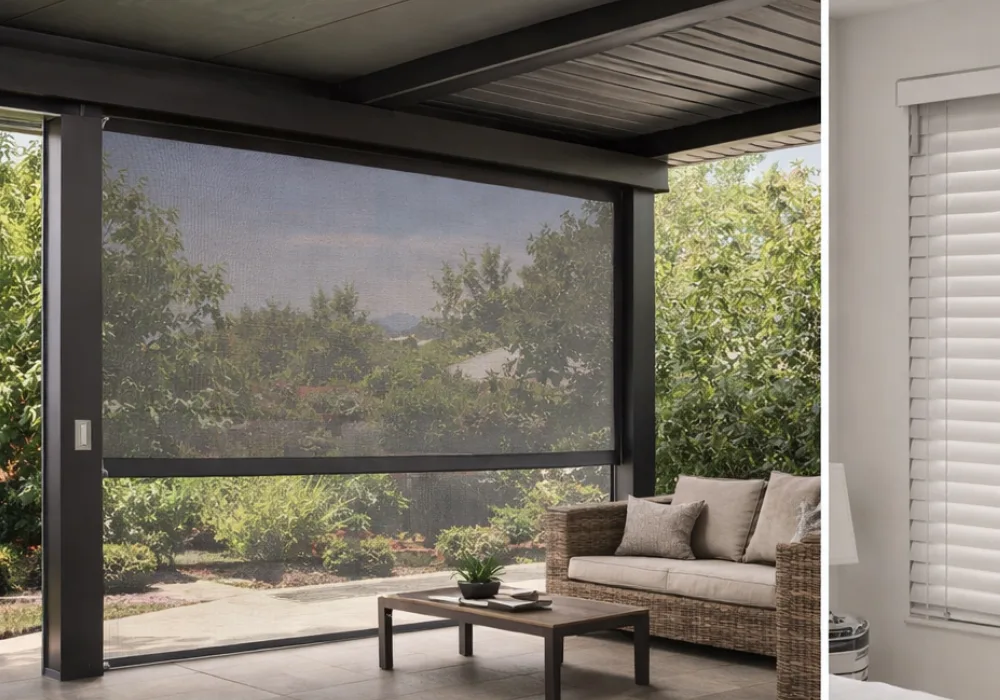
Motorised exterior zip screen installed on a high-end luxury villa patio
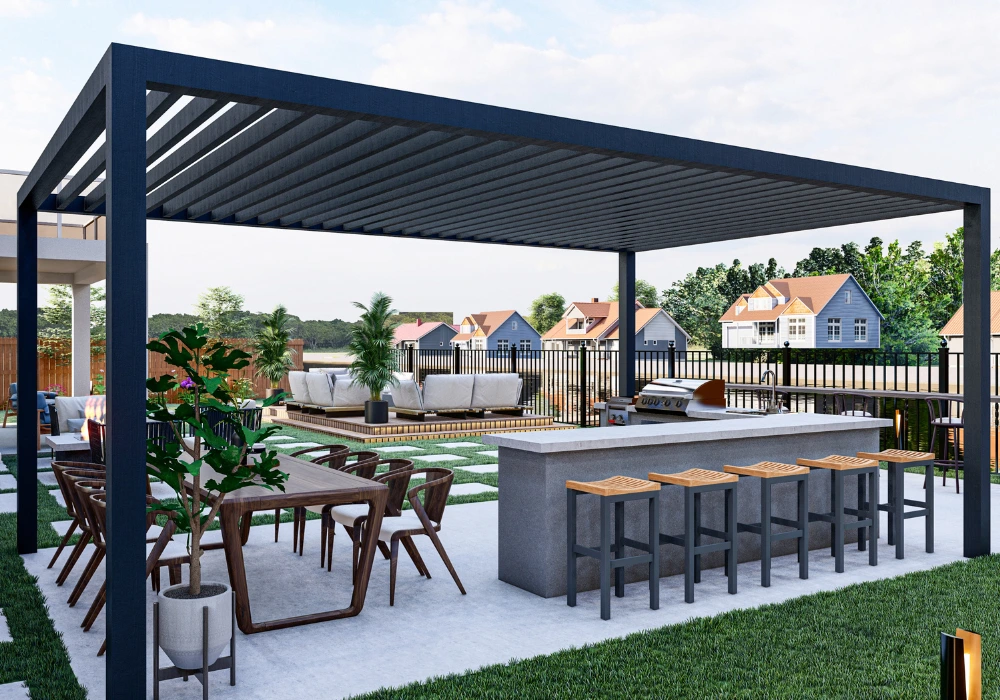
Bioclimatic pergola with integrated motorised exterior zip screen enclosure
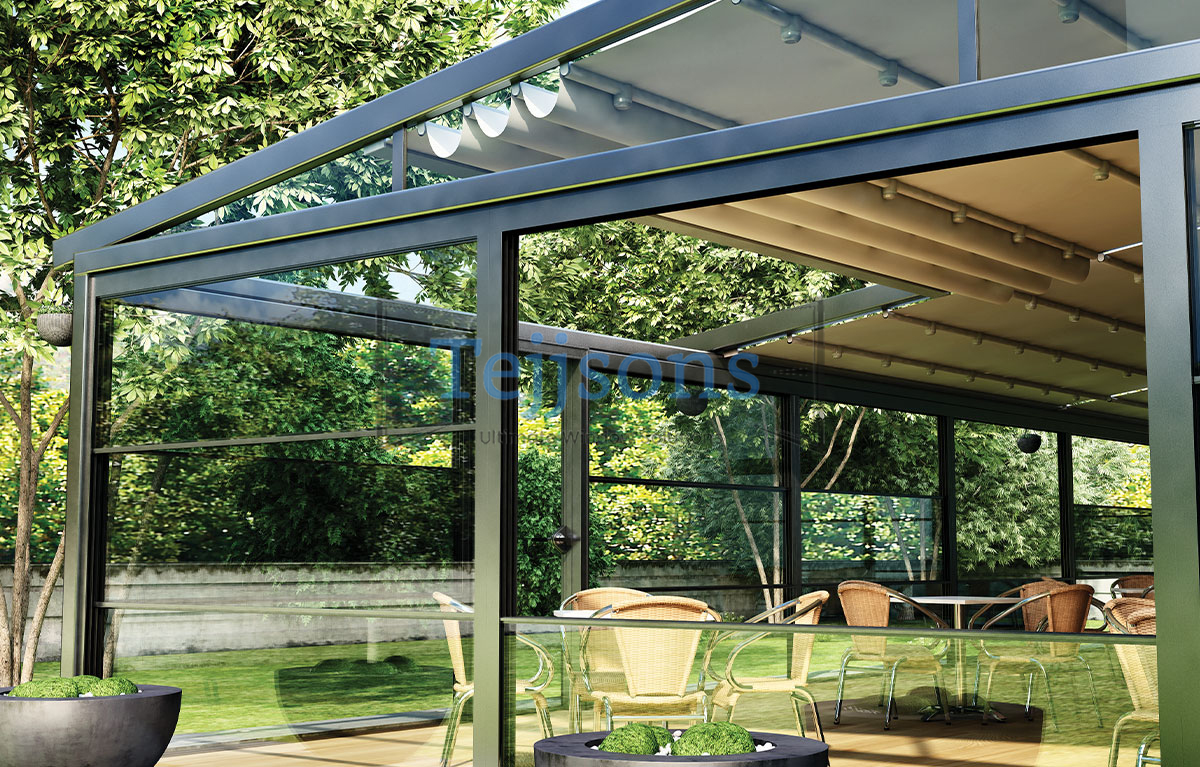
Black powder coated motorised exterior zip screens shading a commercial resort terrace
Direct OEM Manufacturer · 25+ Years Precision Engineering

Motorised Exterior Zip Screens: Architectural Specifications, Wind Dynamics & Global Procurement Guide

Engineered to withstand EN 13561 Class 6 wind pressures (up to 120 km/h), control solar heat gain by 90%, and integrate with smart building automation systems. Fabricated in Surat, India and exported to worldwide commercial developments.

  • Class 6EN 13561 Wind Rating
  • 90%Solar Heat Reduction
  • 6063-T6Extruded Aluminium
  • 6.0mMax Single Span Width
Search Intent & Engineering Insight

Next-Generation Outdoor Envelope Thermal & Solar Dynamics

As global commercial developments transition toward passive thermal control and energy-efficient building envelopes, global procurement managers, façade consultants, and architects are shifting from internal window treatments to exterior dynamic shading. Motorised exterior zip screens represent the apex of outdoor thermal management, stopping micro-solar radiation before it hits glazing surfaces.

Precision zip lock mechanics

Continuous Zip Track Retention

Unlike standard drop blinds that flutter and blow out under light breeze, motorised exterior zip screens utilize a high-frequency welded zipper edge trapped inside a floating PVC damper channel, providing continuous structural tension.

Solar Heat Gain Coefficient reduction

Superior G-Value & SHGC Reduction

External shading absorbs and reflects solar radiation before it hits glass. By reducing Solar Heat Gain Coefficient (SHGC) down to 0.08–0.12, these systems cut interior HVAC energy consumption by up to 35% in tropical and desert climates.

Structural aluminium alloy extrusion

Architectural 6063-T6 Extrusions

Head cassettes, side guides, and weighted bottom bars are manufactured from 6063-T5 and T6 architectural-grade aluminium profiles, powder-coated to 60–80 microns or anodised to 15–25 microns for extreme coastal anti-corrosion life.

Engineering Precision & Fabric Science

The Anatomic Mechanics of High-Tension Zip Screen Systems

Understanding why commercial projects choose zip screens over traditional wire-guided or channel-guided shades comes down to structural dynamics and wind load dissipation.

At Tejjsons, our motorised exterior zip screens are engineered with a dual-chamber side guide profile. A high-durability co-extruded PVC inner dampening track floats inside an extruded aluminium sleeve held by stainless steel leaf springs. When high winds exert lateral pressure on the screen surface, the zipper teeth bind tighter into the inner PVC damper, distributing wind load evenly along the vertical height rather than concentrating stress on top mounting points.

  • Zipper Retention Mechanics: High-frequency (HF) welded continuous zipper tape guarantees fabric retention up to Beaufort Scale 10 wind speeds (89–102 km/h standard, extended to 120 km/h with heavy weighted bottom rails).
  • Fabric Matrix Selection: Option of micro-perforated fiberglass core (e.g., Serge 600) or high-tenacity pre-constrained polyester (e.g., Soltis Perform 92) delivering openness factors ranging from 1%, 3%, 5% to 10%.
  • Acoustic & Insect Sealing: The continuous side zip track eliminates lateral light gaps, prevents dust infiltration, and forms an insect-proof seal for outdoor living, hospitality decks, and bioclimatic structures.
  • Weighted Hem Bar Dynamics: Bottom rails feature internal steel ballast inserts and co-extruded EPDM bottom seals to compensate for minor sill irregularities and maintain horizontal fabric flatness.
Engineered motorised exterior zip screen showing flush cassette and side guide details
120 km/hTested wind resistance capacity (Class 6 EN 13561)
Product Catalogue

Engineered Motorised Exterior Zip Screen Models

Designed for diverse architectural integration—from surface-mounted retrofit building facades to fully recessed structural ceilings and heavy-duty bioclimatic pergolas.

Tejjsons Extreme Wind-Lock Zip Screen 130 Series

Tejjsons Extreme Wind-Lock 130 Series

Designed for large-span commercial facades, high-rise balconies, and exposed coastal resorts. Features a 130mm square or rounded cassette housing tubular motors up to 25Nm torque for spans up to 6.0m wide.

Tejjsons Flush-Recessed Architectural Zip Screen 110 Series

Tejjsons Flush-Recessed 110 Series

Specifically engineered for seamless integration into curtain walls, soffits, and exterior insulation finishing systems (EIFS). The bottom rail retracts completely into the cassette, leaving zero exposed profile when open.

Tejjsons Solar-Powered Standalone Zip Screen

Tejjsons Autonomous Solar-Powered Zip Screen

Equipped with an integrated top-mounted photovoltaic panel and rechargeable lithium-ion battery tubular motor. Eliminates structural electrical wiring, ideal for retrofit villas, historic renovations, and remote dining pavilions.

Technical Reference Data

Engineered Specifications for Motorised Zip Screens

Compare key structural, optical, and electrical parameters across Tejjsons standard exterior zip screen configurations.

Specification Metric 110 Series (Recessed / Compact) 130 Series (Commercial / Heavy-Duty) Solar PV Standalone Series
Maximum Width / Drop 4.5 m / 3.5 m 6.0 m / 5.0 m 4.0 m / 3.0 m
Max Screen Surface Area 15.0 m² 25.0 m² 12.0 m²
Wind Load Classification Class 5 (EN 13561) ~ 90 km/h Class 6 (EN 13561) ~ 120 km/h Class 4 (EN 13561) ~ 75 km/h
Cassette Dimensions 110 mm × 110 mm (Square/Recessed) 130 mm × 130 mm / 150 mm 110 mm × 110 mm with Photovoltaic Strip
Aluminium Alloy Grade 6063-T6 Extruded Aluminum 6063-T6 Heavy-Wall Extruded Aluminum 6063-T5 Architectural Grade
Surface Finish Standard Powder coating 60–80μm / Anodised 20μm Qualicoat Class 2 / Marine-grade C5-M Architectural Powder Coating 60–80μm
Fabric Composition Options Fiberglass 42% + PVC 58% / Soltis 92 High-tenacity Polyester Soltis 86/92/B92 Micro-perforated Serge 600 (3% / 5% open)
Motorization & Control Somfy io / RTS, Dooya RS485 / Dry Contact Somfy WT/io 120V-230V, Becker KNX/BACnet 12V DC Solar Motor with Integrated Li-ion Battery
Smart Building Protocols KNX, Control4, Crestron, Matter, Zigbee 3.0 Direct RS485 / BMS dry contact relay integration RF 433MHz Handheld Remote / App Gateway
Modern commercial building facade incorporating automated smart zip screens
Future Trends Analysis

Future Procurement Trends in Automated Exterior Shading

The market for motorised exterior zip screens is undergoing rapid technological and procurement transformations driven by green building codes, smart city initiatives, and direct OEM supply chain integration.

  • 1. Smart Building Integration (BMS & AI Weather Sensing): Commercial buyers are moving away from manual remotes toward automated BMS integration via RS485, KNX, and BACnet protocols. AI-driven weather stations automatically deploy screens during peak sun intensity to reduce chiller loads and retract them under hurricane-force wind alerts.
  • 2. Passive House & Decarbonization Mandates: With strict energy performance building directives (like EU Energy Performance of Buildings Directive and US LEED v4.1), external zip screens are becoming mandatory spec items for zero-carbon architecture to achieve high thermal resistance ratings.
  • 3. Bioclimatic Modular Synergies: Modern outdoor living projects combine louvered roof pergolas, minimal sliding doors, and motorised exterior zip screens into integrated custom modules supplied by a single manufacturing source.
  • 4. Direct OEM Sourcing & Factory Precision: Procurement leaders are bypassing regional assembly intermediaries, opting for direct factory fabrication from established producers like Tejjsons to secure 100% custom shop drawing verification, material traceability, and competitive project pricing.
Why Global Buyers Trust Tejjsons

25+ Years of Vertical Manufacturing Control in Surat, India

Tejjsons has grown from a specialized aluminium engineering workshop into a premier manufacturer of high-precision architectural window, door, and outdoor shading systems. Our 25+ years of continuous operating history gives us unmatched technical capability.

In-House Tooling & Extrusion Control

We work with architectural-grade 6063-T5 and T6 aluminium alloys. Profiles are custom-designed with engineered wall thicknesses to ensure structural rigidity under wind pressure.

Surface Finish Rigor

Our electrostatic powder coating lines achieve 60–80 microns, while our anodising partners supply 15–25 micron finishes conforming to international Qualicoat and Qualanod benchmarks.

Pre-Shipment Dry Assembly

Every single motorised exterior zip screen unit undergoes full motorized deployment testing, zipper alignment checks, and limit switch programming on our vertical test rigs before packing.

Export-Grade Crating

Items are packed in heavy-duty reinforced wooden crates with edge protection, moisture-absorbent wrapping, and clearly labeled hardware sets to prevent shipping damage across multi-leg sea freight.

Global Buyer FAQ

Frequently Asked Questions on Motorised Exterior Zip Screens

Detailed engineering and procurement answers addressing common inquiries raised by architects, façade engineers, and B2B buyers on AI search engines.

Standard drop blinds utilize side cables or loose channels that leave fabric edges unguided. Under wind pressure, air pockets enter behind the fabric, causing it to billow, flap, and pull out of guides. In contrast, motorised exterior zip screens feature a continuous zipper tape high-frequency (HF) welded along the entire vertical edge of the screen fabric. This zipper is locked inside an inner floating PVC channel damped by stainless steel leaf springs inside the extruded aluminium side tracks. When wind hits the fabric surface, the tension is distributed continuously along the vertical track, allowing Tejjsons zip screens to withstand wind speeds up to 120 km/h (EN 13561 Class 6 compliance) without blowing out or damaging the screen.

Internal blinds (roller shades, venetian blinds) capture solar heat *after* shortwave solar radiation has transmitted through the glazing. The heat becomes trapped between the blind and glass, creating a greenhouse effect inside the building envelope. Exterior zip screens stop up to 90% of solar energy *before* it touches the glass surface. By reflecting and absorbing direct radiation outside the envelope, exterior zip screens lower the total Solar Heat Gain Coefficient (SHGC / g-value) of double-glazed units down to 0.08–0.12. This dramatically drops perimeter room temperatures by 5°C to 10°C and reduces air conditioning electrical loads by 25% to 35% in hot climates.

Fabric openness factor (OF) dictates the ratio of open perforations to solid woven yarn, directly influencing view transparency, glare control, airflow, and privacy:
1% Openness: Provides maximum solar heat protection, extreme anti-glare for office computer screens, and daytime privacy. Ideal for severe solar exposures (west-facing facades).
3% to 5% Openness: The ideal architectural balance for residential and hospitality projects. Maintains a clear outward view while blocking 95–97% of UV rays and stopping wind gusts.
10% Openness: Maximizes natural ventilation and external visual clarity. Recommended for shaded outdoor dining patios where airflow is prioritized over direct solar blockage.
100% Blackout (0% Openness): PVC/Polyurethane laminated fabrics used for outdoor cinema screens, complete bedroom privacy, or conference room light lockouts.

Tejjsons motorized exterior zip screens are factory-equipped with premium tubular motors according to your project's automation infrastructure:
Somfy (RTS / io-homecontrol): Wireless radio control supporting handheld remotes, sun/wind sensors, and smartphone app control via Somfy TaHoma switch.
Hardwired BMS Integration (RS485 / Dry Contact): Electronic limit tubular motors (Dooya, Becker, Somfy WT) that connect directly to building automation controllers (KNX, Crestron, Control4, BACnet) for synchronized facade management.
Autonomous Solar Motors: 12V DC tubular motors powered by a top-cassette mounted PV solar strip and internal rechargeable lithium battery—requiring zero structural wiring.

For single-panel motorized zip screens, Tejjsons manufactures standard cassette sizes up to 6.0 meters in width and 5.0 meters in drop (maximum surface area up to 25.0 m² per screen). To prevent fabric deflection (smile effect) on spans exceeding 4.0 meters, we utilize heavy-wall 78mm or 85mm diameter grooved internal aluminum winding tubes with floating internal springs. For extra-large openings beyond 6 meters, multiple zip screen cassettes can be coupled side-by-side with shared double-side guide tracks.

Quality assurance follows a strict 5-stage manufacturing protocol: profile extrusion check, powder coat thickness testing (60–80 microns), high-frequency zip welding inspection, motorized test-bench cycling, and diagonal tolerance verification. For export cargo, screens are wrapped in protective polyethylene film, fitted with impact-absorbing foam caps, and packed inside steel-reinforced wooden crates. Hardware accessories, remote controllers, and custom CAD installation manuals are boxed and cataloged per crate for smooth site clearance and fast assembly.

Tejjsons motorized zip screens are built for low-maintenance longevity. In coastal or sandy environments, side tracks should be cleaned periodically with low-pressure fresh water to flush away salt deposits or fine grit from the inner PVC damper guides. Applying a light dry silicone spray into the side zipper track once a year lubricates the zipper path without attracting dirt or dust. The screen fabric (fiberglass/polyester core) is dirt-resistant and can be washed with soft water and neutral soap.

Yes. Tejjsons zip screens are designed for modular mounting flexibility:
Pergola Side Enclosures: Cassette boxes mount directly flush underneath pergola gutter beams, with side guides fastening directly to structural corner posts.
Curtain Wall Integration: Our 110 Series features a recessed head cassette and concealed side channels that hide completely inside facade soffits or exterior wall cavity insulation, preserving clean modern architecture.

Ready to Spec Motorised Exterior Zip Screens for Your Project?

Send your architectural drawings, elevation schedules, or tender requirements to Tejjsons engineering division. Our technical team will issue comprehensive CAD shop drawings, wind load performance reports, and competitive FOB/CIF quotation terms.

Contact Us About Tejjsons Manufacturer