Engineered for Commercial Towers, Luxury Villas, Hospitality Projects, and High-Acoustic Urban Envelopes
Why Tier-1 Developers, Facade Consultants, and International Importers Partner with Leading Manufacturers
Selecting a global architectural glass manufacturer requires rigorous technical scrutiny beyond standard product brochures. Modern building envelopes demand precision thermal breaks, structural integrity against extreme wind loads, optical clarity, and long-term durability. Leading manufacturers like Tejjsons have pioneered vertically integrated production—from raw 6063-T5/T6 billet extrusion handling and automated CNC machining to cleanroom insulated glass unit (IGU) assembly.
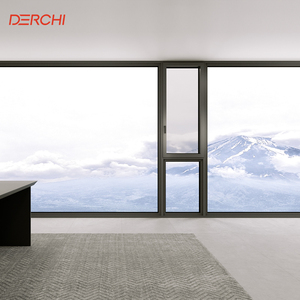
Proprietary magnetic levitation sliding systems eliminate traditional track friction. Heavy triple-glazed panels float effortlessly on magnetic carriages, establishing sleek minimal sightlines while sustaining exceptional air and water tightness under high pressures.
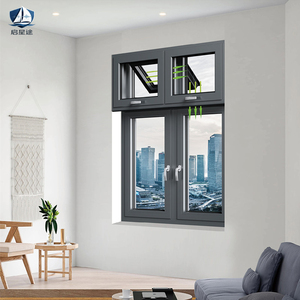
Utilizing high-grade 6063-T5 and T6 architectural aluminum profiles treated with 60–80μm electrostatic fluoropolymer powder coating or 15–25μm marine-grade anodizing to withstand saline, coastal, and high-UV environments without degradation.
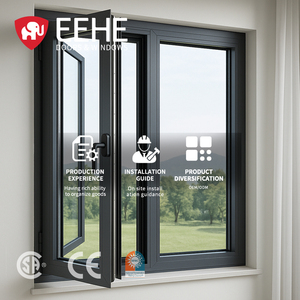
Every fabricated unit undergoes stringent pre-dispatch dry assembly, diagonal tolerance verification, motorized cycle testing, and air/water infiltration simulations to guarantee zero on-site installation failures for overseas projects.
Comprehensive Baseline Data for Specifiers, LEED Consultants, and Envelope Engineers
To assist architects and facade engineers in procurement, the technical matrix below outlines performance benchmarks across core architectural glass and thermal aluminum profile configurations. Performance values are verified through NFRC, Passive House, and European EN standard testing protocols.
| System Build-up | Thermal Transmittance (U-Value) | Solar Heat Gain (SHGC) | Acoustic Rating (STC) | Ideal Application & Climate Zone |
|---|---|---|---|---|
| Low-E Double Glazed (6mm + 12Ar + 6mm) | 1.6 – 1.8 W/m²K | 0.35 – 0.42 | 36 – 40 dB | Commercial Office Towers & Mild/Temperate Climates |
| Triple Glazed Thermal Break (6mm + 12Ar + 6mm + 12Ar + 6mm) | 0.9 – 1.2 W/m²K | 0.25 – 0.32 | 42 – 46 dB | Luxury Villas & Sub-Zero Cold / Extreme Hot Zones |
| NT91 Passive House Certified System | ≤ 0.8 W/m²K | 0.22 – 0.28 | 45 – 48 dB | Net-Zero Carbon Buildings & High-Efficiency Residences |
| Laminated Acoustic Glass (6mm + 1.52PVB/SGP + 6mm) | 2.2 – 2.6 W/m²K | 0.45 – 0.55 | 44 – 50 dB | Urban Commercial Core, Airport & Hotel Facades |
| PDLC Switchable Smart Glass Unit | 1.8 – 2.1 W/m²K | 0.38 – 0.48 | 38 – 42 dB | Executive Boardrooms, Luxury Spas & Smart Partitioning |
Market Intelligence & Next-Generation Technologies Shaping Commercial Envelopes
As global building codes enforce near-zero energy consumption, Vacuum Insulated Glass (VIG) is rapidly replacing thick triple-glazed units. By creating a high-vacuum thermal void (0.1mm) between glass sheets, VIG achieves thermal U-values as low as 0.40 W/m²K within a profile thickness of under 10mm. This permits ultra-slim aluminum framing, reducing structural envelope deadweight while maintaining unmatched energy conservation.
Architectural glass is evolving from a passive thermal barrier into an active power-generating asset. Transparent cadmium telluride (CdTe) and perovskite BIPV coatings allow vision glass and spandrel panels to convert ambient sunlight into electricity without sacrificing Visible Light Transmittance (VLT). Major international developers are incorporating BIPV facades to earn high LEED and BREEAM decarbonization ratings.
Static tinting is giving way to dynamic glazing controlled by building management systems (BMS) or IoT mobile apps. Polymer Dispersed Liquid Crystal (PDLC) and Electrochromic coatings automatically adjust solar heat gain coefficient (SHGC) and tint opacity in real-time based on solar angle and ambient room light, reducing HVAC cooling loads by up to 32% in tropical high-rise installations.
Procurement teams in Europe, North America, and the Middle East are prioritizing suppliers utilizing post-consumer recycled aluminum billets and low-carbon hydro-powered smelting. Utilizing primary aluminum with certified embodied carbon footprints below 4.0 kg CO2e/kg enables developers to meet stringent Scope 3 carbon reduction mandates.
Essential Guidelines for International Project Managers, Quantity Surveyors, and Importers
Yes. Reputable manufacturers manage full international supply chain logistics. Profile frames are packed in reinforced steel-banded wooden crates with corner guards, while insulated glass units are secured in heavy-duty A-frame export crates. Shipments are accompanied by complete bill of lading documentation, mill test certificates, custom clearance packing lists, and hardware installation drawings.
For international ocean freight logistics, manufacturers typically work from one 20ft/40ft Full Container Load (FCL) or one consolidated project scope. However, for specialized trial orders, custom mock-ups, or distributor evaluation samples, flexible LCL (Less Container Load) shipments can be arranged upon technical review.
Structural frames require 6063-T5 or 6063-T6 architectural grade aluminum extrusions compliant with ASTM B221 or EN 755. Glass units must undergo fully tempered or heat-strengthened processing compliant with ASTM C1048 or EN 12150 standards. Low-E coatings should be applied via magnetron sputtering (soft coat) inside sealed double or triple glazed cavities filled with 90%+ pure argon gas.
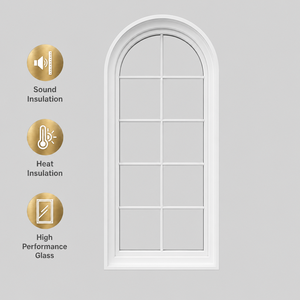
Standard architectural aluminum casement and sliding systems require 4 to 6 weeks for fabrication following final shop drawing sign-off. Complex engineering systems—such as magnetic levitation sliders, motorized curtain walls, or custom curved/arched windows—require 6 to 8 weeks. Maritime transit times vary by destination port and are confirmed prior to production.
Yes. In-house engineering teams calculate structural glass deflection and frame inertia based on localized wind load variables (e.g., ASCE 7 in the USA, Eurocode 1 in Europe, or regional coastal typhoon ratings). Profiles, glass thicknesses, structural silicone glazing (SSG), and anchoring clips are engineered specifically to satisfy local structural building codes.
Tier-1 manufacturers provide multi-year structural and coating warranties. Standard fluoropolymer (PVDF) powder coatings carry 10 to 20-year color retention warranties against chalking and fading. Insulated glass units carry a 10-year warranty against seal failure, internal condensation, or desiccant degradation.
Aluminum is a highly conductive metal. A thermal break involves inserting a low-conductive polyamide (PA66 with 25% glass fiber) strip between the interior and exterior aluminum profile extrusions. This structural thermal barrier reduces frame heat conduction by up to 70%, preventing interior condensation and dramatically lowering HVAC power consumption.
Yes. Manufacturers supply comprehensive 3D installation manuals, section drawings, and video commissioning guides. For large-scale commercial developments or automated maglev/motorized installations, technical engineers can provide remote video guidance or on-site installation supervision and contractor training.
Submit your architectural drawings, elevation plans, or Bill of Quantities (BOQ). Our technical engineering team will deliver structural calculations, U-value estimations, and factory-direct quotation within 24 hours.