Precision-engineered sliding glass pocket systems, casement doors, and acoustic insulated profile assemblies for high-end residential, hospitality, and commercial developments.
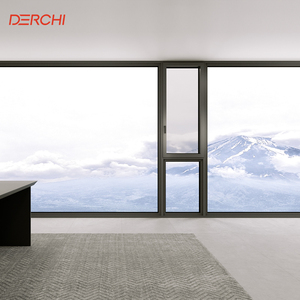
Engineered with low-E insulated double glass and multi-chamber thermal breaks for superior acoustic attenuation and space-saving cavity concealment.
Get a Quote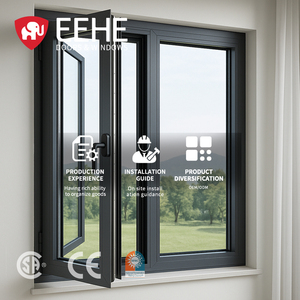
Custom NFRC certified thermal break aluminium frame with curved header capability, offering seamless sliding cavity integration for luxury villas.
Get a Quote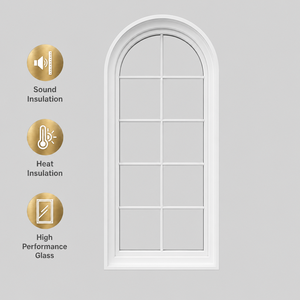
Heavy-duty 6063-T6 alloy profile featuring acoustic foam damping and continuous weather seals designed for custom self-built homes and resorts.
Get a Quote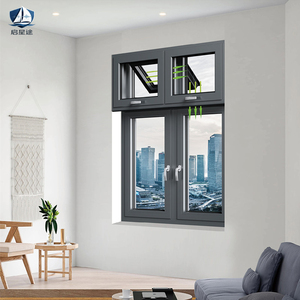
Patented airflow technology combined with silent top-hung pocket tracks, maintaining thermal performance while enabling micro-ventilation.
Get a Quote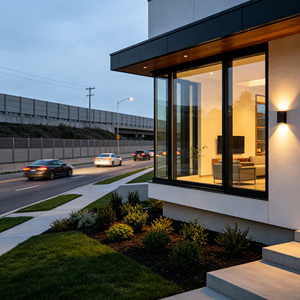
Heavy-duty structural pocket mechanism with triple glazing build-up, integrated mesh folding screens, and a 5-year comprehensive hardware warranty.
Get a Quote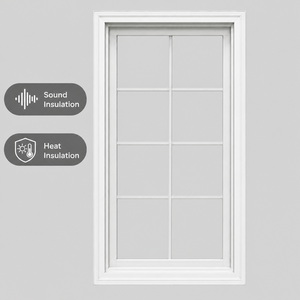
Ultra-slim frame sightlines featuring internal geometric Georgian grille bars, ideal for contemporary interior partitions and exterior balcony pockets.
Get a Quote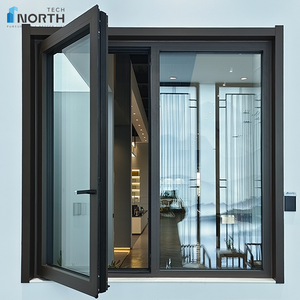
Certified for extreme energy efficiency with poly-ceramic thermal breaks, achieving sub-0.8 W/m²K insulation metrics for green building standards.
Get a Quote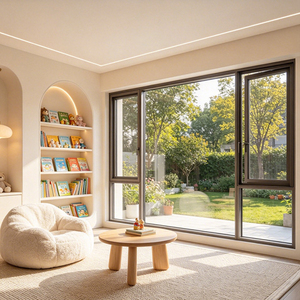
Designed for high-traffic hospitality projects, featuring smooth soft-close dampers, concealed drainage gutters, and hurricane-rated wind load protection.
Get a QuoteModern architectural design is increasingly defined by the elimination of structural boundaries, the maximization of usable floor space, and the integration of uninterrupted natural light. Standard swing doors and conventional exposed sliding systems consume valuable real estate, imposing dynamic swing arcs that restrict interior layout flexibility and compromise minimalist design language. The architectural pocket door—a sliding door assembly engineered to slide effortlessly into a concealed wall cavity—has evolved from a lightweight interior spatial divider into a structural, thermally broken building envelope solution.
As a specialized OEM/ODM Pocket Doors Factory & Exporter with over two decades of precision manufacturing heritage, we engineer fully customized, heavy-duty aluminium pocket sliding systems tailored to the exact specifications of global real estate developers, architectural specifiers, facade engineering contractors, and volume distributors. Operating out of our advanced fabrication facilities, we combine automated CNC extrusion milling, high-precision thermal barrier crimping, specialized glass unit assembly, and surface treatment facilities to supply certified door systems across North America, Europe, Australia, the Middle East, and Southeast Asia.
The structural integrity of an aluminium pocket door system relies on the design of its hidden structural frame—often referred to as the cassette frame—and the overhead track extrusion. Our OEM/ODM production lines utilize primary-grade 6063-T5 and 6063-T6 architectural aluminium alloys. The wall pocket cavity must withstand structural dead loads, lateral wind loads (in exterior balcony applications), and continuous operational cycling without deflecting or misaligning the concealed track mechanism.
Extruded aluminium box studs integrated into a rigid cassette framework, resisting wall deflection and eliminating drywall binding.
PA66 reinforced nylon thermal break strips inserted between inner and outer profile extrusions to prevent heat transfer and condensation.
Dual-directional magnetic kinetic dampers absorb kinetic energy during opening and closing, delivering silent stop movement.
Thermal breaking is essential for exterior pocket door installations in both hot and cold climates. Without a thermal barrier, high thermal conductivity across aluminium profiles leads to significant HVAC energy loss and interior moisture condensation inside the wall pocket, potentially damaging internal wall structures. By incorporating multi-chambered polyamide thermal break strips (PA66GF25), our exterior pocket systems achieve low overall heat transfer coefficients (U-values ranging from 1.1 to 1.8 W/m²K depending on glazing selection), satisfying strict regional energy codes such as NFRC, Title 24, and Passive House criteria.
Historically, the primary technical draw-back of pocket doors was poor acoustic performance due to the gap required for the door panel to travel into the wall cavity. Our engineering team has solved this challenge through multi-stage acoustic isolation sealing systems:
Below is an empirical specification reference table representing our baseline engineering capability. Full custom modifications (ODM) can be adapted directly from architectural CAD/BIM shop drawings.
| Performance Parameter | Standard Interior Specification | Heavy-Duty Exterior Specification | High-Acoustic / Passive Standard |
|---|---|---|---|
| Frame Alloy & Temper | 6063-T5 Architectural Grade | 6063-T6 High Tensile Alloy | 6063-T6 Reinforced Profile |
| Profile Wall Thickness | 1.4 mm – 2.0 mm | 2.0 mm – 3.0 mm structural | 2.5 mm – 3.2 mm heavy rail |
| Thermal Insulation | Non-thermal / Slim profile | PA66 Thermal Break (14.8mm - 24mm) | Poly-ceramic Multi-chamber Break |
| Glass Build-up | 8mm - 12mm Toughened Glass | 6mm + 12Ar + 6mm Low-E Double Glazed | 6 Low-E + 12Ar + 6 + 12Ar + 6 Triple Glazed |
| Max Panel Weight Load | 120 kg per door leaf | 250 kg per door leaf | 400 kg heavy-duty maglev rail |
| Acoustic Rating (STC) | STC 28 - 32 dB | STC 35 - 40 dB | STC 42 - 45+ dB |
| Track Mechanism | Top-hung ball-bearing roller track | Stainless steel top/bottom guidance | Frictionless Magnetic Levitation (Maglev) |
| Surface Finish Options | Qualicoat Class 2 Powder Coating (60-80µm), Anodized (15-25µm), Fluorocarbon PVDF, Wood Grain Transfer | ||
As commercial developers and high-end residential builders optimize spatial economics, procurement strategies for window and door systems are shifting away from off-the-shelf catalog products toward fully integrated, factory-engineered OEM/ODM assemblies. Buyers are looking for specific technology vectors:
The integration of linear magnetic induction motors into top-hung sliding tracks represents the pinnacle of modern door automation. Maglev pocket doors operate without mechanical belt drives, pulleys, or high-friction rollers. When activated via wall sensor, smart home automation, or biometric entry systems, magnetic fields suspend and propel the panel silently into the wall pocket. In addition to luxurious user operation, maglev systems dramatically reduce mechanical wear, reducing long-term maintenance costs in high-traffic hotels and luxury developments.
Architects are demanding invisible framing where the perimeter aluminium profile is fully recessed into finished drywall, ceiling, and flooring channels. Modern OEM pocket doors feature ultra-slim vertical interlocks (as narrow as 18mm sightline) with completely flush floor tracks, creating a fluid transition between indoor living rooms and exterior terraces when open.
Procurement teams are increasingly combining glass pocket doors with Polymer Dispersed Liquid Crystal (PDLC) switchable privacy glass. Integrated wiring harnesses routed through the pocket cavity allow the glass panel to switch from completely clear to opaque white via wall switch, smartphone application, or occupancy sensor—eliminating the need for traditional blinds in corporate conference rooms and master suite bathrooms.
The global construction sector is undergoing a rapid transition toward decarbonization, off-site modular assembly, and circular economy compliance. Aluminium pocket door manufacturing sits at the intersection of these critical macro trends.
Furthermore, green building rating systems such as LEED v4.1, BREEAM, and WELL require verified Environmental Product Declarations (EPDs) for architectural metalwork. Our manufacturing plant utilizes recycled billet content and clean extrusion processing, providing foreign importers and project developers with full traceability documentation to satisfy regional embodied carbon limits.
Navigating global door system supply chains requires a trusted manufacturing partner who understands international building codes, structural engineering tolerances, and secure export logistics. Here is how our factory delivers verified competitive advantages for OEM and ODM clients:
Complete custom design support based on your project drawings—including custom extrusion profiles, specialized glass configurations, and hardware matching.
Every pocket cassette and track mechanism undergoes 100% factory pre-assembly, squareness calibration, and sliding cycle testing prior to crating.
Reinforced steel-banded wooden crates, protective corner bumpers, and A-frame glass racks ensure flawless transit via sea container freight.
Direct technical answers to common questions asked by international project buyers, procurement managers, and facade engineering teams.
We offer both shipping configurations depending on client preference and freight optimization. Standard orders are shipped as Knock-Down (KD) cassette kits with pre-machined profiles, hardware schedules, and step-by-step assembly guides to minimize container volume. For large project orders, pre-assembled cassette frames can be supplied for immediate jobsite insertion.
For standard existing pocket door profiles, our MOQ starts at one complete container load or project scope equivalent (approx. 50-100 sets). For custom proprietary extrusion tooling (ODM), we require an initial minimum batch of 3 metric tons of aluminium extrusion, with tooling die costs fully refunded upon reaching agreed annual volume benchmarks.
Our heavy-duty exterior thermal break pocket doors feature concealed step-down drainage channels, continuous EPDM gaskets, and wind-load interlocking mullions tested up to 3500 Pa (equivalent to Category 4 hurricane conditions). Water penetration resistance is achieved through internal sub-frame sill flashing and weeping valves.
We provide a comprehensive multi-year manufacturer warranty: 10 years on aluminium extrusions and factory surface coatings (powder coating/anodizing), 5 years on insulated glass seal integrity, and 5 years on mechanical hardware (rollers, tracks, dampers, handles). Replacement hardware kits are included with every export container shipment.
Yes. Our in-house engineering team provides complete 2D CAD detail drawings and 3D BIM models for sign-off prior to production. We review wall stud construction, structural header deflection calculations, drainage details, and interface details with your project team.
Standard fabrication lead time is 4 to 6 weeks following CAD drawing sign-off and deposit receipt. Specialized custom finishes, complex triple-glazed units, or motorized maglev orders typically require 6 to 8 weeks. Ocean transit times vary depending on the destination port and are confirmed prior to order lock-in.
Partner with an established OEM/ODM factory to engineer your project's architectural door and window envelope. Connect directly with our engineering team for instant consultation and pricing.
Get a Quote