Explore our top-tier wholesale window and tinted glass assemblies, custom-manufactured for high-rise commercial facades, luxury villas, and passive residential builds.
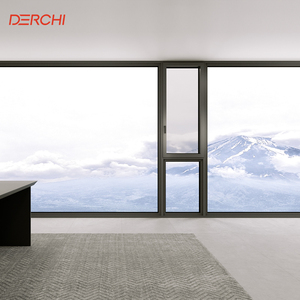
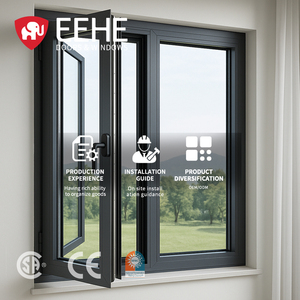
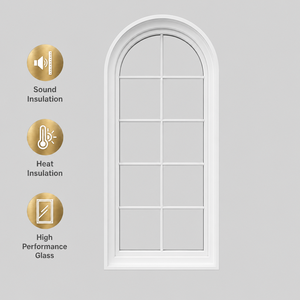
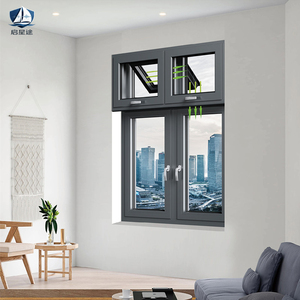
An authoritative technical guide for facade contractors, architectural specifiers, and glass importers evaluating OEM production lines in China.
Tinted glass—frequently specified as body-tinted or heat-absorbing glass—is manufactured by introducing microscopic quantities of metallic oxides directly into the molten raw batch within float glass furnaces. Far from being a mere aesthetic application, this chemical formulation fundamental alters the optical density and thermodynamic profile of the finished pane.
During float synthesis at temperatures exceeding 1,500°C, precise dosing of metal additives yields targeted spectrally selective performance:
By integrating metal oxides throughout the glass body rather than relying on surface-applied films, Chinese wholesale manufacturers guarantee permanent color stability that will never peel, bubble, oxidize, or degrade under extreme ultraviolet exposure.
Evaluating commercial-grade tinted glass requires analyzing three key spectrophotometric parameters:
Measures the ratio of incident solar radiation admitted through a window pane. High-grade body-tinted glass reduces SHGC from standard clear glass baseline of 0.82 down to 0.40–0.24, reducing HVAC cooling loads by up to 35%.
Ranging from 15% (Dark Grey privacy tint) to 75% (Light French Green), controlling VLT eliminates interior workspace glare while minimizing reliance on artificial daytime illumination.
Empirical optical performance metrics across standard 6mm monolithic body-tinted glass substrates produced in Chinese factories.
| Glass Shade / Tint Type | Nominal Thickness | Visible Light Transmittance (VLT %) | Solar Direct Transmittance (%) | UV Rejection Rate (%) | Solar Heat Gain (SHGC) | Primary Commercial Application |
|---|---|---|---|---|---|---|
| Euro Bronze / Golden Tint | 6.0 mm | 53 % | 44 % | 92 % | 0.56 | Luxury Residential, Spandrel Facades |
| Dark Bronze | 6.0 mm | 23 % | 26 % | 96 % | 0.43 | Executive Showrooms & Curtain Walls |
| Euro Grey (Light Grey) | 6.0 mm | 45 % | 38 % | 94 % | 0.51 | Modern Commercial Office Complexes |
| Dark Grey / Privacy Black | 6.0 mm | 14 % | 18 % | 98 % | 0.34 | VIP Lounges, Data Centers, Skylights |
| French Green (F-Green) | 6.0 mm | 72 % | 46 % | 90 % | 0.54 | Tropical High-Rise Exterior Windows |
| Ford Blue / Ocean Blue | 6.0 mm | 60 % | 48 % | 91 % | 0.57 | Coastal Resorts & Marine Enclosures |
| Low-E Double Tinted IGU (6+12A+6) | 24.0 mm Unit | 32 % | 16 % | 99.5 % | 0.24 | Zero-Energy & Passive House Towers |
Integrating 25+ years of glass cutting, edge tempering, auto-laminating, and double-glazed frame fabrication under a single stringent quality control system.
Equipped with Austrian LiSEC and Swiss Bystronic automated cutting tables, holding dimensional tolerances within ±0.3mm. Features fully automated robotic arris edge-polishing and laser-guided drilling for spider-glass fitting cutouts.
Dual-chamber forced convection tempering furnaces process body-tinted glass without optical distortion or roller wave. Optional Heat Soak Testing (HST) per EN 14179 guarantees zero spontaneous breakage from Nickel Sulfide (NiS) inclusions.
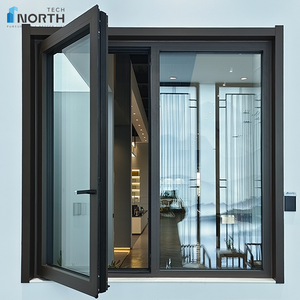
We do not just sell raw glass panels. Our engineers integrate tinted panes directly into thermal break aluminum profiles (6063-T5/T6 alloy), acoustic lamination layers (SentryGlas® SG / PVB), and motorized window automation systems.
How evolving building codes, decarbonization targets, and smart glass technology are reshaping international trade requirements.
Traditional single-pane body-tinted glass is rapidly being phased out by strict international energy codes. The emerging global baseline couples a tinted outer pane (for solar thermal absorption and glare reduction) with a magnetron-sputtered double-silver Low-E coating on Surface #3, separated by an argon gas-filled cavity. This hybrid configuration achieves U-values down to 1.1 W/m²K while preserving stunning architectural hues.
Commercial developers are moving toward dynamic glass solutions. By combining traditional body-tinted outer substrates with thin-film electrochromic layers, smart buildings can transition from 60% VLT down to 1% VLT via automated building management systems (BMS), responding dynamically to sun angle and outdoor light intensity.
Urban density demands higher sound transmission class (STC) ratings. Wholesalers are witnessing a massive surge in demand for soundproof laminated glass featuring tinted PVB acoustic interlayers sandwiched between heat-strengthened glass panels. This design achieves sound reduction exceeding 45 dB while meeting structural hurricane impact standards.
Global procurement teams now require Environmental Product Declarations (EPD). Leading Chinese factories are retrofitting float lines with natural gas combustion, oxy-fuel furnaces, and waste heat power generation to cut embodied carbon by up to 28%, empowering projects to score valuable LEED v4.1 and BREEAM credits.
Precision packing engineered to withstand rough sea voyages, tropical humidity, and multi-leg port handling.
Heavy-duty, fumigated solid wood or steel A-frame crates designed specifically for glass sheets up to 3660mm x 2440mm. Integrated rubber pads prevent edge-to-edge contact and point loading during ocean container transit.
Every glass pane is coated with high-grade polymeric anti-stain interleaving powder to prevent chemical oxidation, surface scratching, and atmospheric moisture adhesion (glass sweating) during long-distance maritime voyages.
Complete vacuum-sealed polyethylene moisture barrier wrapping bundled with industrial silica gel desiccants. Guarantees crates arrive at destination job sites clean, dry, and free of mold or water staining.
Direct technical answers to the most common queries raised by international importers, engineers, and supply chain managers.
For standard stock sizes and body-tinted float glass colors (such as Euro Grey, French Green, and Euro Bronze in 4mm, 5mm, or 6mm thickness), our standard MOQ is one 20-foot full container load (FCL), approximately 2,000 to 2,500 square meters. For custom insulated glass units (IGU), soundproof laminated tinted glass, or specialized aluminum window assemblies, we accept project-based mixed container loads.
Body-tinted glass incorporates metal oxide colorants directly into the molten glass batch during float manufacturing, absorbing solar energy uniformly throughout its structural mass. Solar-reflective glass, conversely, features a microscopic metallic coating deposited onto one surface via online pyrolytic or offline vacuum sputtering processes. Body-tinted glass will never show scratch damage on its tint, while reflective glass offers higher solar radiation rejection at the cost of higher external glare.
Because body-tinted glass—especially Dark Grey, Dark Bronze, and Charcoal shades—absorbs significant solar radiation, its core temperature rises rapidly under direct sunlight. If edge zones remain shaded by window framing, steep thermal gradients occur across the pane, creating high thermal tensile stress. Fully tempering or heat-strengthening the glass increases its structural resistance by 400%, preventing thermal shock fractures.
All raw float and processed glass products comply with rigorous international testing standards, including ISO 9001 quality management, European CE EN 12150 (tempered glass) & EN 14449 (laminated safety glass), American ASTM C1048 & SGCC (Safety Glazing Certification Council), Australian/New Zealand AS/NZS 2208, and NFRC thermal performance ratings.
Yes. Our processing plant features advanced computer-controlled bending and tempering furnaces capable of producing cylindrical, conical, and complex double-curved tinted glass panes. We can bend both monolithic tinted glass and laminated or double-glazed insulated assemblies according to your architectural CAD/BIM templates.
Color variation between production batches is a key risk in commercial glass procurement. We prevent shade mismatches by strictly allocating raw float glass for a single project facade from the same continuous furnace production run. Furthermore, spectrophotometric color testing equipment measures Delta-E values across every lot to guarantee strict color consistency under standard D65 illuminant conditions.
Standard monolithic body-tinted float glass sheets take approximately 10 to 14 days after drawing sign-off and deposit receipt. Deep-processed units—including custom thermal break aluminum windows, triple-glazed soundproof units, or structural laminated tinted glass—require 3 to 5 weeks depending on project scale and custom hardware fabrication schedules.
Partner with a proven OEM/ODM China glass manufacturer. Contact our structural engineering team today to review your project drawings, calculate wind load specs, and lock in competitive direct-from-factory pricing.