Engineered to international building standards (NFRC, CE, SGCC, ISO9001) featuring advanced polymer dispersed liquid crystal (PDLC) interlayers and high-STC soundproofing profiles.
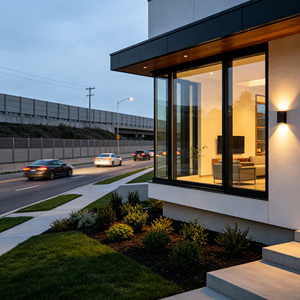
A comprehensive technical evaluation of Polymer Dispersed Liquid Crystal (PDLC) and Electrochromic (EC) technology integration in modern building envelopes.
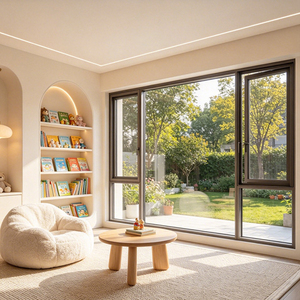
Switchable glass, universally recognized as smart privacy glass or dynamic glazing, functions through the electromechanical alignment of liquid crystal molecules suspended within an optically clear polymer matrix. When electrical voltage is applied across the conductive Indium Tin Oxide (ITO) inner coatings, the liquid crystal droplets align instantaneously in parallel, allowing up to 88% of visible light to pass through without scattering, rendering the glass transparent.
In the non-powered (default off) state, the liquid crystal molecules revert to a randomly dispersed orientation. This micro-structural randomness scatters incoming light in all directions, transitioning the glass into an opaque, frosted barrier within less than 10 milliseconds. This dual-state mechanism delivers complete visual privacy while maintaining ambient light transmission, eliminating the need for mechanical window treatments in executive boardrooms, healthcare facilities, and luxury residences.
| Performance Criterion | PDLC Switchable Glass Standard | Electrochromic (EC) Glass Standard | Architectural Benefit |
|---|---|---|---|
| Visible Light Transmittance (ON) | 80% – 88% | 60% – 75% | Maximum natural daylighting without artificial lumen dependency. |
| Haze Level (OFF State) | ≥ 92% | N/A (Tinting Mechanism) | Complete line-of-sight visual blocking for privacy management. |
| Switching Response Time | < 10 milliseconds (ON to OFF) | 3 to 15 minutes (Gradual Tinting) | Instantaneous privacy control on demand via automation or wall switches. |
| Ultraviolet (UV) Rejection | > 99% (200nm – 380nm) | > 99.5% | Protects internal furnishings, artwork, and flooring from solar fading. |
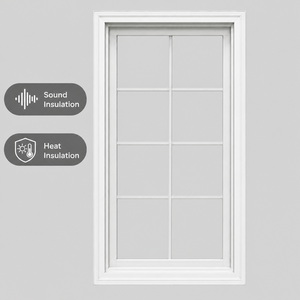
| Acoustic Rating (STC) | STC 38 – STC 48 (Double IGU) | STC 35 – STC 42 | Substantial noise attenuation for metropolitan and airport-adjacent builds. |
| Power Consumption | 3.5 to 5.0 W/m² (ON State) | 0.5 to 1.5 W/m² (State Change Only) | Minimal electrical footprint compatible with solar and smart grid power. |
| Operating Temperature | -20°C to +75°C (-4°F to 167°F) | -30°C to +85°C | Extreme weather durability across arid desert and sub-zero climates. |
Combining 25+ years of extrusion engineering, cleanroom autoclave lamination, and strict export-grade quality control.
Fabricated in ultra-clean environments using medical-grade EVA and PVB interlayers under high-pressure vacuum autoclaving to prevent bubbles, micro-delamination, and yellowing over time.
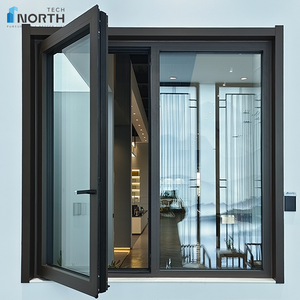
Extruded with precision architectural grade aluminium treated with 60–80µm fluorocarbon (PVDF) powder coating or 15–25µm anodizing for supreme coastal anti-corrosion endurance.
Equipped with multi-chamber polyamide (PA66) thermal insulation strips and warm-edge spacers, achieving low U-factors compliant with Passive House and LEED Green Building certifications.
Every single frame and smart glass panel undergoes rigorous factory dry-assembly, electrical voltage cycling, STC sound isolation checks, and hydrostatic pressure testing before crate packing.
Packaged in customized fumigated A-frame solid wooden crates with internal shock-absorbing EVA foam liners, corner shields, and moisture barrier foil wrapping for seamless multi-leg ocean transit.
In-house CAD/BIM facade engineering support ready to adjust mullion sightlines, concealed wiring channels, motorized maglev actuators, and smart home automation integration (KNX, RS485, Zigbee).
Market intelligence analysis for commercial developers, facade engineering consultants, and architectural distributors.
The global switchable glass industry is rapidly transitioning from standalone mechanical wall switches to fully integrated smart building automation nodes. Modern architectural specifications increasingly mandate native compatibility with building management systems (BMS) utilizing BACnet, KNX, Modbus, and wireless Matter protocols. Future-proof procurement strategies demand smart power supply units (PSUs) equipped with solid-state relay transformers that allow micro-stepping dimming, scheduled privacy transitions based on solar tracking algorithms, and remote IoT diagnostic reporting.
To comply with stringent international net-zero energy targets, switchable PDLC glass is no longer evaluated solely as a privacy feature, but as a core thermal envelope component. Next-generation procurement specs require combining PDLC film layers inside double or triple-glazed Insulated Glass Units (IGUs) coated with soft-coat Low-Emissivity (Low-E) layers and filled with 90%+ Argon gas. Furthermore, research and commercialization are merging Building-Integrated Photovoltaics (BIPV) with switchable film, enabling facade panels to generate solar energy during peak daylight while dynamic tinting modulates interior HVAC cooling loads.
Historical adoption barriers caused by high per-square-meter lamination costs are dissolving due to automated inline vacuum lamination machinery developed in China. Manufacturing advances have doubled production throughput while drastically improving optical clarity (reducing off-axis haze below 3%). As production scales globally, supply chain procurement is consolidating around single-source manufacturers capable of delivering fully fabricated aluminium windows fitted with pre-wired switchable glass, reducing site assembly errors and installation labor by over 40%.
Detailed technical answers addressing engineering, installation, voltage standards, and global shipping compliance.
Send us your architectural drawings, elevation schedules, or tender requirements. Our senior engineering team will provide detailed shop drawings, technical compliance reports, and factory-direct pricing within 24 hours.