Explore our export-grade smart glass assemblies, thermal break profiles, and patented soundproof window systems customized for commercial facades and luxury residential developments.
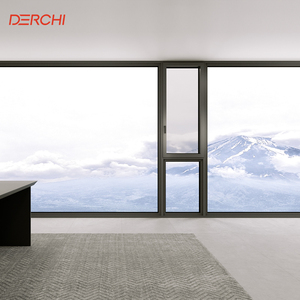
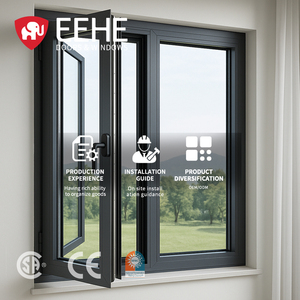
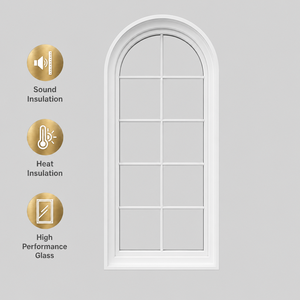
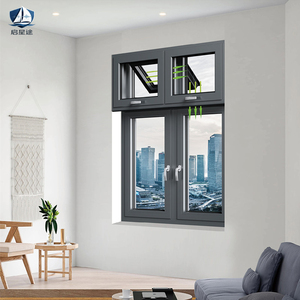
Combining vertically integrated manufacturing with rigorous quality engineering to deliver defect-free architectural glass solutions worldwide.
We own cleanroom EVA/PVB auto-clave lamination lines dedicated to polymer-dispersed liquid crystal (PDLC) and electrochromic film production. This guarantees non-delaminating, zero-bubble smart glass panels with optical clarity exceeding industry benchmarks.
Our extrusions utilize premium 6063-T5 and 6063-T6 virgin alloys processed with high-precision CNC machining. Coated with 60–80μm fluorocarbon powder or 15–25μm anodizing, our frames resist coastal salt spray and intense UV degradation.
Every order undergoes full dry-assembly, electrical circuit verification, diagonal tolerance testing, and water-tightness validation before packing. Overseas site teams never encounter unexpected fitment issues.
Our dedicated engineering department converts complex architectural schematics into complete production drawings. We calculate wind-load thresholds, U-values, and structural anchoring methods prior to fabrication.
Products are shipped in customized heavy-duty steel A-frame glass crates and wooden boxes with corner shock absorbers. Fully documented for seamless international customs clearance at destination ports.
Backing our products with up to 10-year multi-layer warranties covering smart film switching performance, insulated glass seal integrity, and aluminum finish durability.
In modern architectural design, the global demand for dynamic building envelopes has transformed smart glass—specifically Polymer Dispersed Liquid Crystal (PDLC) switchable privacy glass and Electrochromic solar control glass—from a luxury option into a core architectural specification. As global developers, facade contractors, and procurement directors evaluate vendors, China has emerged as the premier manufacturing hub for smart glass technology due to deep supply-chain integration, advanced autoclave lamination facilities, and unmatched cost-to-performance ratios.
However, navigating the OEM/ODM vendor landscape in China requires an in-depth understanding of technical specifications, material selection, quality control protocols, and compliance standards. This guide examines key technical metrics, procurement trends, and engineering innovations driving the smart glass industry into 2030.
Selecting the optimal smart glass technology depends on the target application, operational intent, and environmental exposure. Below is a structural comparison of primary smart glazing technologies engineered by top-tier Chinese manufacturers:
| Technology | Operating Mechanism | Switching Speed | Primary Application | Key Advantages |
|---|---|---|---|---|
| PDLC (Polymer Dispersed Liquid Crystal) | Electrical voltage aligns liquid crystal droplets from frosted to clear. | < 10 milliseconds | Interior partitions, ICU privacy, VIP boardrooms, luxury residential windows. | Instant privacy switching, high opacity in off-state, compatible with projections. |
| Electrochromic (EC) | Low-voltage lithium ion migration alters chemical tint density dynamically. | 3 to 15 minutes | Exterior curtain walls, skylights, commercial skyscraper facades. | Gradual variable solar tinting, significant cooling load reduction, retains view when tinted. |
| SPD (Suspended Particle Devices) | Electrical field aligns light-absorbing micro-particles to adjust light transmission. | 1 to 3 seconds | Automotive sunroofs, marine glazing, high-end residential exterior glazing. | Fine-tuned light control from dark blue to transparent, blocks >99% UV rays. |
When issuing RFQs (Request for Quotations) to Chinese smart glass exporters, specifying exact performance thresholds guarantees that the final delivered insulated glass units (IGUs) match structural drawings and local building codes:
Insights into how architectural decarbonization, IoT building automation, and advanced manufacturing are reshaping the global procurement landscape.
Modern commercial procurement is shifting from standalone wall-switches toward smart glass units equipped with RS485, BACnet, Zigbee, or Wi-Fi controllers. Smart glass panels now automatically adjust tint levels based on rooftop solar irradiation sensors, internal temperature sensors, and room occupancy status, maximizing energy efficiency.
With stringent global mandates such as LEED v4.1, BREEAM, and EU EPBD regulations, developers are prioritizing suppliers who provide verified Environmental Product Declarations (EPDs). Switchable solar glass directly contributes points toward thermal comfort, daylighting management, and operational carbon reduction.
Architectural design trends favor floor-to-ceiling glass expanses without visual vertical mullions. Advanced Chinese manufacturers are scaling production lines to produce continuous smart glass panels reaching widths of 2.0 meters and lengths up to 6.0 meters, as well as complex double-curved switchable assemblies.
The convergence of nanotechnology, material science, and precision automated manufacturing has introduced groundbreaking enhancements to switchable smart glass products exported from China:
By embedding invisible thin-film photovoltaic (BIPV) strips or transparent solar cells within the perimeter frame of smart glass units, next-generation smart windows operate completely off-grid. The glass harvests ambient sunlight during the day to charge internal micro-batteries, which then power the PDLC switching mechanism seamlessly.
Rather than switching an entire glass panel uniformly, laser-etched conductive ITO (Indium Tin Oxide) patterns allow users to control privacy in distinct horizontal or vertical segments. For instance, office occupants can maintain privacy at eye level while leaving the upper portion transparent to maximize natural daylight penetration into deep floor plates.
Leading exporters are combining three distinct performance layers into unified unitized curtain wall cassettes: an outer pane of heat-strengthened Low-E solar glass, a central argon-filled warm-edge cavity, and an inner pane of switchable PDLC laminated safety glass. This hybrid approach delivers STC ratings over 45 dB while keeping solar heat gain coefficients (SHGC) below 0.25.
Direct technical and operational answers to common questions asked by international project buyers, contractors, and importers.
Submit your architectural CAD drawings, schedules, or specifications today. Our senior facade engineering team will provide detailed shop drawings, technical compliance reports, and factory-direct pricing within 24 hours.