Precision-engineered casement, French, and thermal-break window systems certified to international NFRC, STC acoustic, and Passive House standards.
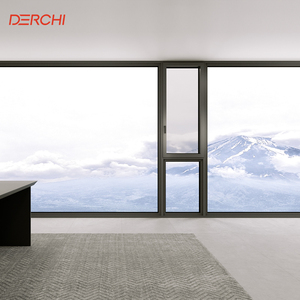
Heavy-duty aluminum casement design engineered for luxury residential and commercial noise attenuation.
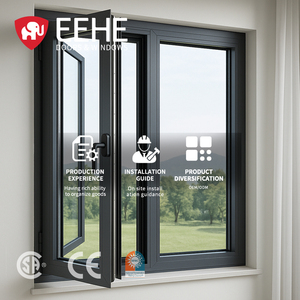
Thermal break aluminum frame combined with precision-bent glass arches for high-end luxury villas.
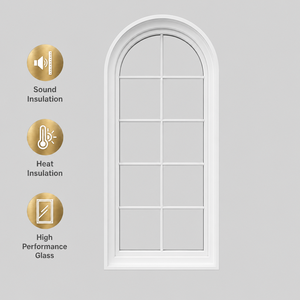
Symmetrical arched double-hinged French glazing providing exceptional energy efficiency for self-built estates.
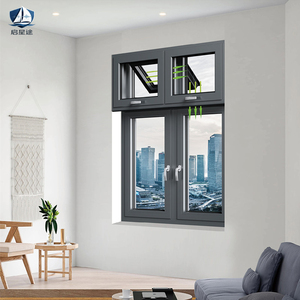
Integrated micro-ventilation channels delivering continuous airflow without compromising acoustic sealing.
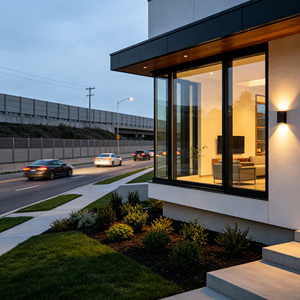
Heavy-duty multi-panel folding French doors equipped with high STC ratings and concealed retractable screens.
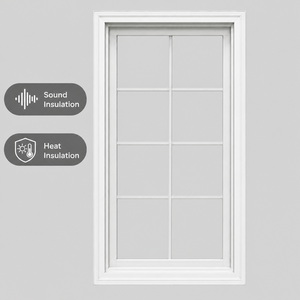
Classic architectural muntin bar design paired with structural 6063-T6 aluminum profile geometry.
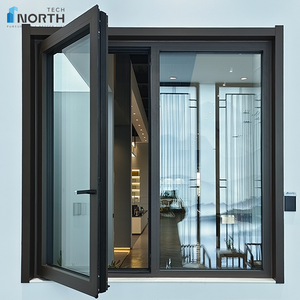
State-of-the-art thermal break engineering designed to satisfy strict European net-zero carbon building codes.
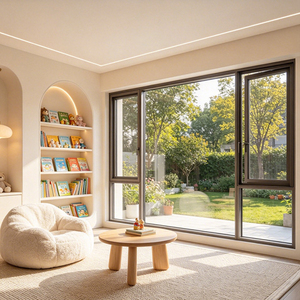
High-load bearing hinges and EPDM multi-chamber perimeter seals built for high-rise coastal resort applications.
Why international specifiers, commercial developers, and glazing importers rely on Chinese manufacturing clusters for high-precision architectural French entry and patio systems.
In contemporary architectural design, French doors represent the pinnacle of elegant transitions between interior luxury spaces and exterior landscapes. However, sourcing French doors at commercial scale requires moving far beyond aesthetic considerations. Modern B2B buyers—ranging from property developers in North America to luxury resort builders in the Middle East—demand strict mechanical stability, thermal efficiency, hurricane-rated structural integrity, and long-term acoustic isolation.
China has evolved into the global hub for architectural aluminum fabrication, housing state-of-the-art manufacturing facilities capable of processing extruded 6063-T5 and 6063-T6 grade aluminum profiles with micrometer precision. When evaluating a premier Chinese OEM manufacturer for French doors and windows, engineering audits must examine five core industrial capabilities: extrusion alloy purity, thermal break strip assembly, automated CNC machining tolerances, surface coating longevity (fluorocarbon/powder coating), and insulated glass unit (IGU) seal integrity.
Top factories utilize primary ingot 6063-T6 aluminum alloys over recycled scrap. This guarantees tensile strength exceeding 205 MPa, crucial for supporting heavy double- and triple-glazed French door leaves without frame sagging.
High-performance French systems incorporate Technoform PA66GF25 (25% fiberglass reinforced polyamide) thermal break strips. This effectively stops thermal conduction, reducing overall system U-factors to under 1.2 W/m²K.
To withstand wind uplift and forced entry, top Chinese manufacturers integrate certified European multipoint lock mechanisms (Roto, Hoppe, Siegenia) paired with heavy-duty 3D adjustable friction hinges capable of supporting 200kg+ sash weights.
Direct technical comparison between standard commodity windows and factory-grade architectural French systems produced by leading Chinese exporters.
| Performance Parameter | Standard Commercial Window | Premium Thermal Break French Door | Passive House Certified (NT91 Series) |
|---|---|---|---|
| Frame Alloy & Temper | 6063-T5 (Standard Extrusion) | 6063-T6 High-Tensile Architectural Aluminum | 6063-T6 Ultra-Heavy Wall Structure (2.0mm+) |
| Thermal Transmittance (U-Value) | > 2.8 W/m²K | 1.4 – 1.8 W/m²K | ≤ 0.79 W/m²K (NFRC / CE Standard) |
| Acoustic Rating (STC / Rw) | STC 28 - 32 dB | STC 38 - 42 dB (Double Low-E Argon) | STC 45 - 48+ dB (Triple Glazed Laminated) |
| Surface Finish Standard | Standard Powder Coat (35-45µm) | AkzoNobel / PPG Powder Coating (60-80µm) | PVDF Fluorocarbon Spray (3-Coat, 25-Yr Weathering) |
| Air Infiltration Rate | Level 4 (ASTM E283) | Level 8 (EN 12207 Class 4) | Airtight Class 4 (0.06 m³/h·m) |
| Wind Pressure Resistance | 2.0 kPa (P3 Rating) | 4.5 kPa (C5 High-Wind / Coastal) | ≥ 5.5 kPa (Hurricane-Impact Certified) |
| Sealing Gasket Technology | Standard PVC Gaskets | Continuous EPDM Synthetic Rubber Gaskets | Co-Extruded Multi-Chamber EPDM Foam Compound |
Key market shifts shaping the next decade of architectural French door and window sourcing for international developers and B2B buyers.
Global building codes (such as the EU Energy Performance of Buildings Directive and US LEED v4.1) are forcing procurement officers to audit the embodied carbon of fenestrated envelopes. Top Chinese factories are transitioning to hydro-powered aluminum smelting and utilizing up to 75% recycled content in non-structural extrusion profiles, backed by verified Environmental Product Declarations (EPD).
The traditional mechanical drag of heavy double French sliding panels is being replaced by zero-friction magnetic levitation (Maglev) motion drives. Modern high-end residential projects specify automated French door actuators integrated with smart home protocols (KNX, Zigbee, Control4), allowing voice-controlled or sensor-triggered operation during climate adjustments.
Architectural demand favors concealed hinges, flush sills, and ultra-narrow frame sightlines (< 20mm visible width) that maximize daylighting. Chinese engineering teams are achieving these slim profiles without sacrificing load metrics by utilizing structural silicone bonding (SSG) techniques and internal stainless steel stiffener ribs.
Smart glass technology—such as Polymer Dispersed Liquid Crystal (PDLC) switchable privacy glass and electrochromic tinting—is increasingly being factory-integrated directly into French door double-glazed units. This eliminates the need for dust-collecting exterior blinds while maintaining instantaneous visual privacy at the press of a button.
How original manufacturers in China control every phase of production—from raw ingot handling to sea-freight packing—to ensure zero defects upon delivery.
Purchasing directly from an established China manufacturer eliminates intermediary markup while granting project teams direct engineering control over custom opening dimensions, specialized glass makeups, and bespoke hardware configurations. Advanced factories operate under strict ISO 9001 quality management standards, executing rigorous multi-stage quality gates before container loading:
Every project starts with factory CAD shop drawings, elevation details, structural wind load calculations, and BIM objects for seamless integration into architectural blueprints prior to profile cutting.
Profiles undergo fully automated 5-axis CNC milling, drilling, and corner key crimping. This guarantees exact diagonal squareness (< 1mm deviation across 3-meter frames) for airtight corner joint alignment.
To eliminate shipping transit damage, finished frames receive protective film wrap, corner guards, and are packed into steel-reinforced wooden crates. Glass units are packed separately in heavy-duty A-frame crates.
Clear, expert answers addressing common questions from overseas architects, general contractors, and door importers.
Yes. Top Chinese window and door manufacturers regularly export project-based orders worldwide across North America, Europe, Australia, the Middle East, and Southeast Asia. Consignments include full export documentation, mill test reports, detailed assembly schedules, structural calculations, and installation guides for seamless local customs clearance.
For custom export projects, standard MOQs usually start at one 20-foot Full Container Load (FCL) or approximately 100 to 150 square meters of fenestration product. However, for specialized commercial projects or luxury private villas, trial orders or sample mock-ups can be negotiated to verify fabrication quality prior to full volume production.
Factories utilize 6063-T5 and high-tensile 6063-T6 architectural grade aluminum profiles. Surface finishes include AkzoNobel powder coating (60–80 microns), anodizing (15–25 microns), or PVDF fluorocarbon coatings for harsh marine environments. Insulated glass options include double or triple glazing with Low-E coatings, argon gas fill, warm-edge spacers, and toughened or laminated safety glass configurations.
Standard production for custom aluminum French doors and casement windows takes approximately 4 to 6 weeks following CAD drawing sign-off and material specification confirmation. Specialized systems—such as maglev sliders, passive house certified frames, or motorized setups—require 6 to 8 weeks. Ocean freight transit varies by destination port (e.g., 15–25 days to North America West Coast, 25–35 days to Europe).
Absolutly. In-house factory engineering teams analyze client architectural drawings, structural wind load requirements, and regional building standards (such as NFRC, CE, AS2047, or Florida High-Velocity Hurricane Zone codes). Detailed shop drawings highlighting sightlines, U-value specs, drainage channels, and anchoring details are submitted for approval before any profile extrusion or cutting begins.
Thermally broken aluminum French doors equipped with polyamide (PA66GF25) isolators reduce frame heat conduction by up to 60% compared to traditional non-thermal aluminum frames. When paired with double or triple Low-E insulated glass, system U-values drop dramatically, significantly reducing heating and cooling HVAC loads in hot, cold, or mixed climates.
Leading manufacturers back their products with multi-year warranties covering aluminum profile integrity and surface coatings (up to 10–25 years), hardware operational life (5–10 years), and IGU seal failure (10 years). Complete spare hardware kits, replacement gaskets, and remote video technical support are routinely provided to site installation teams.
Connect directly with our senior engineering team to request CAD shop drawings, structural wind load consultations, or a competitive factory-direct quote.