Choosing among China’s Top 10 Motorised Exterior Zip Screens Suppliers requires more than comparing catalogues or factory photographs. These systems combine outdoor fabrics, aluminium guides, tubular motors, control units, and wind protection. A reliable supplier must coordinate every part. The screen should move evenly, seal closely, and remain stable beside a window during gusty weather. Small details matter. A loose zipper can create noise, light gaps, and early fabric wear.
Building-science expert Joseph Lstiburek has stated, “The building enclosure must control rain, air, heat, and vapor.” This principle gives Motorised Exterior Zip Screens a wider purpose. They can reduce solar gain, improve visual comfort, and support a building’s envelope. However, they do not replace proper glazing, drainage, insulation, or professional installation. Buyers should request fabric performance data, motor specifications, wind-testing evidence, warranty terms, and maintenance guidance. Ask for project references, not only product samples.
This guide examines ten Chinese suppliers through a practical purchasing lens. It considers manufacturing experience, customization capacity, export support, testing procedures, and after-sales communication. Some suppliers may excel at large commercial projects. Others may suit villas, apartments, hotels, or smart-home renovations. A polished website proves little by itself. Factory audits, sample testing, and clear technical drawings offer stronger evidence. No ranking is perfect, because climate, budget, and installation conditions differ. A supplier that performs well in Dubai may need different fabric choices in London. That limitation deserves attention. The best decision balances engineering credibility, product consistency, and realistic site requirements.
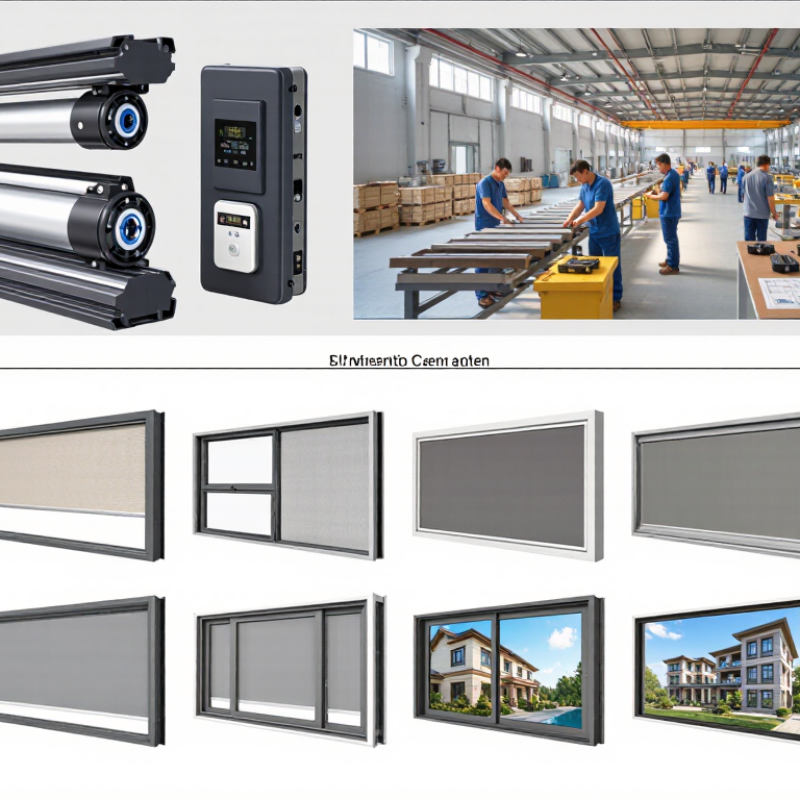
Motorised exterior zip screens are outdoor fabric shades guided through side channels. A tubular motor raises or lowers the screen with a wall switch, remote, timer, or building-control system. The zipped edges keep the fabric inside its tracks during moderate wind, while the mesh reduces glare, insects, and direct solar heat.
This design places the shading outside the glass, where it can block sunlight before heat enters the room. The U.S. Department of Energy estimates that windows can cause 25–30% of residential heating and cooling energy use. The IEA’s Buildings 2023 report also states that buildings consume about 30% of global final energy. These figures do not prove that every screen delivers equal savings. Orientation, mesh openness, installation quality, and user habits matter greatly. A screen is not a magic energy cure.
Tips: Select mesh openness by exposure. A tighter mesh improves glare control, but it may reduce the view. Check wind ratings, drainage, motor noise, emergency operation, and access for fabric replacement. During site inspections, installers should confirm that side channels are plumb and firmly fixed. Small alignment errors can create rubbing, light gaps, or uneven movement. Consider a sun sensor for west-facing windows, but review its settings after seasonal changes. Automation often fails through poor calibration, not weak hardware.
| Data Dimension | Typical Specification or Range | What It Means for Buyers |
|---|---|---|
| Product Definition | Exterior roller screen with motorised operation and side channels containing a zip-retention system | The side retention keeps the fabric engaged in the guides and helps reduce light gaps, fabric movement and insect entry compared with a standard free-hanging roller shade. |
| Primary Applications | Windows, balconies, patios, pergolas, verandas and glazed outdoor rooms | The system is generally selected where solar control, privacy, glare reduction and improved outdoor comfort are required. |
| Operating Method | Electric tubular motor with wall switch, remote control, wired control or smart-home interface | Control options should be matched with the project wiring plan, preferred user interface and any building-automation requirements. |
| Fabric Construction | Common options include PVC-coated polyester, fiberglass or polyester-based technical fabrics | Fabric construction affects dimensional stability, transparency, UV resistance, cleanability and overall appearance. |
| Fabric Openness | Common solar-screen openness factors: approximately 1%, 3% and 5% | A lower openness factor generally provides greater glare and solar control, while a higher factor usually allows more outward visibility and daylight. |
| Solar and Glare Control | Reduces direct solar radiation and glare when installed externally and selected with a suitable fabric | External shading is positioned before sunlight reaches the glazing, which can improve the effectiveness of solar-control strategies compared with internal shading alone. |
| Privacy Performance | Usually strongest during the daytime when exterior brightness is higher than interior brightness | Privacy can reverse at night when interior lighting is switched on; blinds, curtains or opaque fabrics may still be required. |
| Wind Resistance | Depends on screen width, height, fabric, side-channel design, fixing method and installation location | There is no single universal wind rating. Buyers should request tested performance or project-specific engineering data rather than relying only on a nominal value. |
| Maximum Dimensions | Project-dependent; larger screens require suitable motor torque, tube size, fabric weight and reinforced fixing | Maximum width and drop must be confirmed as a complete system. A motor rating alone does not determine the safe screen size. |
| Side-Guide Function | Zip-guided channels retain the fabric edges and guide the bottom bar during movement | Correct alignment and secure anchoring are essential for smooth operation, low light leakage and resistance to fabric disengagement. |
| Bottom Bar | Weighted or enclosed bottom rail, commonly seated within or aligned with the side channels | The bottom bar helps maintain fabric tension and supports consistent lowering, especially on wider or taller screens. |
| Frame Materials | Typically powder-coated aluminium for the headbox, side channels and bottom rail | Aluminium offers low weight and corrosion resistance when the coating and installation details are suitable for the local environment. |
| Headbox Options | Open-roll, semi-enclosed or fully enclosed cassette designs | Enclosed systems provide better protection for the rolled fabric and motor, while open systems may have a simpler appearance and installation arrangement. |
| Water Management | Primarily a solar-screen system; it is not automatically a waterproof enclosure | Most screen fabrics are designed for shading and airflow rather than complete rain exclusion. Drainage, fabric type and local weather conditions must be considered. |
| Insect Protection | Can reduce insect passage when the zip system, side guides and bottom seal are correctly closed | Performance depends on installation tolerances and perimeter sealing. It should not be described as completely insect-proof without test evidence. |
| Motor Protection | Motor enclosure rating varies by design and installation; outdoor suitability must be confirmed | Specify a motor and electrical installation suitable for the exposure level, moisture conditions and applicable local electrical regulations. |
| Noise and Movement | Normally smooth and quiet when the motor, fabric, guides and fixing points are correctly selected | Rattling, uneven movement or excessive noise can indicate incorrect alignment, insufficient tension, debris in the guides or unsuitable wind conditions. |
| Control Integration | May support dry-contact control, wired automation, radio control or smart-home gateways, depending on the motor system | Compatibility should be confirmed before ordering because control protocols, voltage requirements and commissioning procedures differ between systems. |
| Power Requirements | Common configurations use low-voltage control systems with a dedicated power supply or mains-connected tubular motors | The required voltage, current, cable route and isolation method must be confirmed by the electrical installer and local code requirements. |
| Maintenance Requirements | Periodic cleaning of fabric and guides, visual inspection of fixings and checking of motorised operation | Routine maintenance helps prevent debris-related faults and identifies fabric, channel or fastening problems before they affect operation. |
| Key Quotation Information | Opening width, opening height, installation position, fabric type, openness factor, cassette style, control method and local wind exposure | Providing complete project information enables a more accurate system selection and reduces the risk of unsuitable dimensions or control components. |
They are outdoor fabric shades guided by side channels. A tubular motor raises or lowers them. Controls may include switches, remotes, timers, or sensors.
They block sunlight before it reaches the glass. This can reduce glare, direct solar heat, and insect entry. Results depend on orientation, mesh openness, glass type, and installation quality.
No. A screen is not a magic energy cure. Poor calibration, unsuitable fabric, or incorrect installation can limit savings. This deserves honest review.
Choose tighter mesh for stronger glare control. However, tighter fabric may reduce the outdoor view. West-facing windows often need stronger afternoon protection.
Confirm that side channels are plumb and firmly fixed. Check drainage, fabric tension, wind ratings, motor noise, and emergency operation. Small alignment errors can cause rubbing or uneven movement.
Wall switches, remotes, timers, sun sensors, and building-control systems are common options. Review sensor settings after seasonal changes. Automation can fail through poor calibration.
Request fabric test results, motor duty-cycle data, wind information, salt-spray evidence, and installation drawings. Quality certificates are useful, but they do not replace independent inspection.
Compare total landed cost, including packaging, controls, spare parts, and shipping. Check separate coverage for motors, fabric, controls, and finishes. Warranty terms are not always equivalent.
Standard orders may take two to six weeks after design approval. Custom profiles and unusual fabric colours may take longer. Test one sample first. Small fitting problems can become expensive across many units.
This guide explores China’s leading suppliers of Motorised Exterior Zip Screens, focusing on how these systems improve outdoor comfort, privacy, glare control, and protection from wind and insects. It explains the operating principles of zip-guided screen fabrics, including motorized control, side-track stability, fabric selection, weather resistance, and integration with smart-home or building-management systems. Readers will also learn how to evaluate suppliers based on engineering capability, production capacity, quality-control procedures, communication, and experience with international projects.
The comparison covers the key products and technologies offered by established manufacturers, along with customization options such as dimensions, colors, mesh openness, control methods, and installation formats. It also considers manufacturing standards, testing procedures, certifications, packaging, and export documentation. Finally, the guide reviews practical purchasing factors, including estimated pricing, minimum order requirements, lead times, warranty terms, after-sales service, and overseas technical support, helping buyers select a dependable supplier for residential, commercial, and hospitality applications.