+91 93776 04923 [email protected] Surat, Gujarat, India · Exporting worldwide
0%

A patio can feel exposed at noon and unusable when rain arrives. An adjustable-roof pergola offers a way to manage changing conditions without closing off the garden. Still, the right choice depends on more than appearance. Aluminium Bioclimatic Pergolas vary in structure, controls, drainage, finishes, and installation requirements.

Start with the space itself. Measure the opening, note nearby walls and doors, and watch how sunlight moves across the area. A compact terrace may need a simple wall-mounted design, while a wider garden seating area could benefit from a freestanding structure. Think about wind and rainfall, too. A roof that works well in mild weather may not suit every exposed site.

Look closely at the details. Check the frame dimensions, coating information, water-management design, and whether the louvres can be adjusted manually or by motor. Ask how rainwater leaves the roof and where it drains. Small details matter. Confirm what the stated wind or snow ratings actually cover, and request documentation rather than relying on a sales claim. Local conditions and installation quality can change performance.

There is no single best model for every home. A larger system may offer more coverage, but it can also need stronger support and more careful planning. That trade-off is easy to overlook. This guide will help you compare practical features, set a realistic budget, and identify questions to ask suppliers before committing. Some specifications may still feel unclear; that is a reason to pause and verify them, not guess.
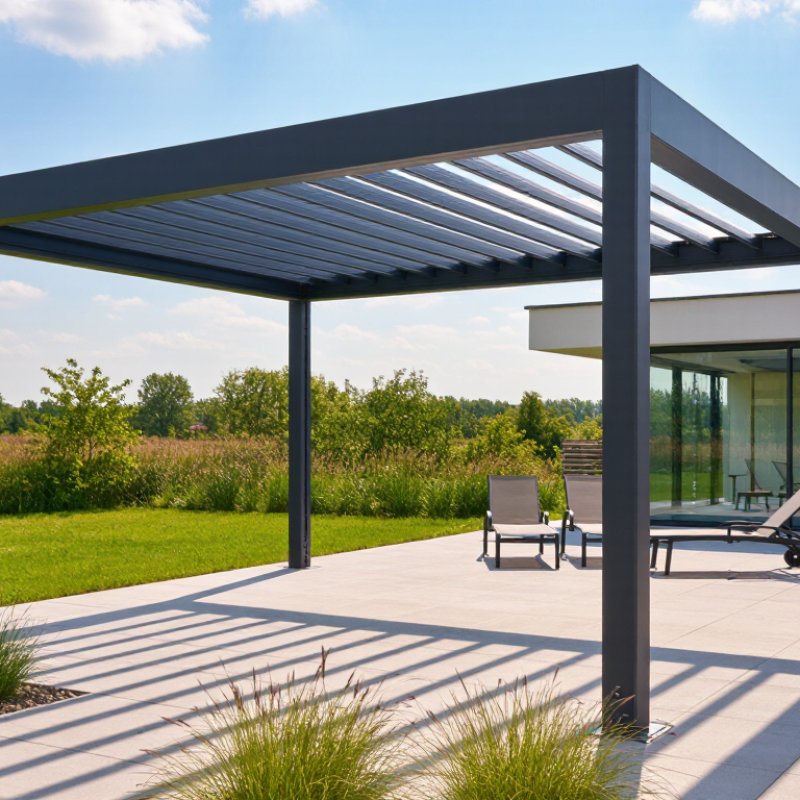
How to Choose the Best Aluminium Bioclimatic Pergola?

Define Your Space, Climate, and Intended Use

How to Choose the Best Aluminium Bioclimatic Pergola?

Define Your Space, Climate, and Intended Use

Begin with the site, not the catalogue. Measure the patio, note nearby walls, and track where afternoon sun falls. A narrow courtyard may need adjustable louvers for changing shade, while a large, exposed terrace needs careful wind planning. Measure twice. Note where rainwater can drain, too; a beautiful layout can still leave puddles beside the door.

Climate data helps turn guesses into practical choices. ASHRAE’s climatic design data uses cooling conditions with 0.4%, 1%, and 2% annual exceedance levels, alongside heating conditions such as 99% and 99.6%. These are design benchmarks, not promises of comfort on every extreme day. For U.S. locations, NOAA’s 1991–2020 Climate Normals summarize 30 years of temperature and precipitation records. Check these patterns, then confirm local wind and snow loads with a qualified designer. Shade is not enough.

Your intended use changes the specification. For outdoor dining, consider glare, airflow, and clearance for chairs when the louvers open. For a reading nook, softer light and protection from sideways rain may matter more. If the space serves several purposes, sketch each setup with furniture in place. It is easy to overestimate usable room. Be honest about maintenance, too: coastal air, nearby trees, and frequent storms can make cleaning and drainage more demanding than expected.

Understand Louver Design and Weather-Control Features

A bioclimatic pergola works best when its louvers suit how you use the space, not just how they look in a catalogue. Check blade width, pivot range, and spacing. Wider blades can create a calmer ceiling, while a larger opening lets in more sun and airflow. Notice how the blades sit when partly open; a small angle change can shift shade across a dining table. Small details matter.

For rain, ask where water goes when the louvers close. A well-designed system channels runoff into gutters and downpipes, but poor alignment or blocked outlets may still cause drips. Confirm the wind and snow limits for the full installation, including posts and fixings. Generic ratings can be misleading. An open terrace and a sheltered courtyard face different conditions.

Manual controls are straightforward, while motors make frequent adjustments easier. Rain or wind sensors can respond automatically, but their settings need checking and they do not replace sensible operation. Ask whether the roof can stop at a partly open angle and what happens during a power cut. Try the controls. Also check maintenance access: leaves can collect in gutters, and moving parts need periodic inspection. That detail is easy to overlook.

Compare Aluminium Grades, Finishes, and Structural Strength

An aluminium bioclimatic pergola should be judged by its alloy, finish, and frame design together. Many extruded profiles use 6063 aluminium, valued for smooth surfaces and detailed shapes. Alloy 6061 is often chosen where higher strength is needed, though the finished profile and engineering matter more than the grade alone. Check the supplier’s material specifications, not just a label. Details matter.

Powder coating offers a broad choice of colours and can protect the metal when preparation and application are well controlled. Anodising creates a durable oxide layer and keeps the aluminium’s metallic character visible. For coastal or humid locations, ask about pretreatment, coating thickness, and corrosion testing. A colour chip can look convincing indoors, but sunlight may reveal a different result. Looks can mislead.

Structural strength depends on more than thick-looking beams. Profile shape, wall thickness, column spacing, fasteners, and roof span all affect performance. Ask for engineering data that covers the intended span and local wind conditions, plus clear details for anchoring the posts. Moving louvres also add weight and place repeated loads on connections. A larger frame may feel reassuring, but unnecessary bulk is not proof of better design. Check the numbers and the joints.

How to Choose the Best Aluminium Bioclimatic Pergola?

Compare aluminium grades, finishes, and structural strength. The chart shows representative minimum 0.2% proof-strength values commonly specified for extruded profiles; actual requirements vary with product thickness, temper, and applicable standard.

Higher proof strength can support more demanding structural designs, but it does not determine pergola capacity on its own. Span, profile geometry, connections, wind and snow loads, and installation all matter. Powder coating and anodising are finish options for weather protection and appearance; choose a coating system suited to the exposure and maintenance conditions.

Check Sizing, Installation Needs, and Local Building Rules

Sizing an aluminium bioclimatic pergola starts with the space you will actually use. Measure the patio, door swings, and furniture footprint, then mark post positions with tape. Allow room for chairs to slide back and keep posts clear of drains and service access. Measure twice. A wall-mounted structure also needs a sound fixing surface; cladding alone may not provide adequate support. Ask the installer for the required fixing details and design loads, rather than assuming every wall can carry the same weight.

Installation depends on exposure and local rules, not just the pergola’s dimensions. ASCE/SEI 7-22 sets out methods for determining site-specific wind, snow, and rain loads. The 2021 International Residential Code’s Table R301.2(1) lists climatic and geographic design criteria for local adoption. NOAA’s 1991–2020 U.S. Climate Normals provide station-level snowfall and temperature records, useful for understanding local conditions, but they are not a substitute for structural snow-load calculations. Codes vary. Before ordering, ask your building department whether a permit, setback review, or engineered drawings are required. Check the planned roof opening, drainage route, and foundation depth against those requirements. One detail is easy to miss: water discharged beside a post can soften the ground and affect its footing. A site visit helps, though it may reveal constraints after plans are drawn.

Evaluate Costs, Warranties, and Long-Term Maintenance

The purchase price is only one part of a pergola’s cost. Ask for an itemized quote covering delivery, installation, foundations, drainage, and electrical work. A paved patio may need different supports from a lawn. Small site changes can add up.

Compare warranties by component, not just by the number of years advertised. Check how long the aluminium frame, finish, motor, and sensors are covered. Read the exclusions closely. Coastal air, standing water, or neglected cleaning may affect coverage. Also ask whether labor and replacement visits are included. A long warranty is less useful if a minor repair requires expensive travel.

Maintenance is usually manageable, but it is not zero. Leaves can collect in the roof channels, while dust may build up around moving parts. Rinse the frame with fresh water and mild detergent, then clear the drainage paths as recommended by the installer. Avoid abrasive pads that could mark the coating. Keep a simple record of cleaning and repairs; it may help with warranty questions later. One detail buyers sometimes overlook is access: if the roof mechanism sits high or against a wall, routine inspection can be awkward. That is easy to miss during a showroom visit.

FAQS

What should I measure before choosing a pergola?

Measure patio edges, nearby walls, and afternoon sun. Sketch furniture in place. Measure twice.

How does local climate affect pergola design?

Check local rainfall, temperature, wind, and snow conditions. Ask a qualified designer to confirm site loads. Averages cannot predict every storm.

Which pergola features suit dining or reading?

Dining areas need chair clearance, airflow, and glare control. Reading corners may need softer light and protection from sideways rain. I might underestimate the space, too.

What should I check on adjustable louvers?

Compare blade width, pivot range, and spacing. Test how partial openings shift shade across a table. Small details matter.

How should a pergola manage rainwater?

Ask how closed louvers direct water into gutters and downpipes. Check drainage outlets for blockages and watch for drips near doors.

Are motorized controls and weather sensors useful?

Motors help with frequent adjustments. Sensors can respond automatically, but settings need checking. Ask what happens during a power cut. Try the controls.

What costs should an installation quote include?

Request itemized costs for delivery, installation, foundations, drainage, and electrical work. Patio supports may differ from lawn supports.

What should I check in the warranty and maintenance plan?

Check coverage for the frame, finish, motor, and sensors. Ask whether labor is included. Clear leaves from channels and rinse the frame with mild detergent. Routine access is easy to overlook.

Conclusion

Choosing the right Aluminium Bioclimatic Pergolas starts with understanding how you plan to use the space and the conditions it must handle. Consider the area’s size, sun exposure, rainfall, wind, and seasonal temperatures, along with whether the pergola will be used for dining, relaxation, or entertaining. Adjustable louvers and weather-control features can help regulate sunlight and airflow, while suitable drainage and protective options may improve comfort during changing weather.

Compare aluminium grades, coatings, and structural strength to find a design suited to your climate and expected use. Check that the dimensions fit the site, and confirm what preparation or professional installation may be needed. Local building requirements can also affect placement and construction, so review them before making a decision. Finally, assess the full cost, warranty coverage, and routine maintenance needs. A well-matched pergola can provide a practical outdoor space while remaining durable and straightforward to care for over time.


Charlotte

Charlotte

Charlotte is a professional marketing specialist dedicated to helping customers better understand innovative products and practical solutions. With extensive knowledge of the company’s product portfolio, market trends, and customer needs, she transforms complex information into clear, engaging, and......