+91 93776 04923 hello@www.laurieshomes.com Surat, Gujarat, India · Exporting worldwide
0%

A motorised louvered pergola can change how a patio works from one hour to the next. Open the blades for winter sun; tilt them when afternoon glare reaches the table. Close them when light rain starts. The difference is tangible: shaded chairs, a drier dining area, and a control system you can reach without leaving your seat. Yet not every model handles these tasks equally well. Frame strength, louver range, drainage, motor access, and installation quality all matter.

This guide explains how to compare Motorised Louvered Pergolas in 2026, from measuring the space to checking the controls and after-sales support. One point needs a verified source before publication: “[Insert a verified quotation from a named motorised-pergola industry expert about design, installation, or weather performance.]” Add the expert’s full name and role, then confirm the wording against a reliable interview or published source. That detail is worth checking. A persuasive quote without a traceable source can weaken an otherwise useful guide. The advice here focuses on practical questions: Will the frame suit your site? Can the louvers direct rain toward a proper drainage route? Is the motor reachable for servicing? Small oversights can become daily annoyances. Choosing well takes more than comparing price tags.
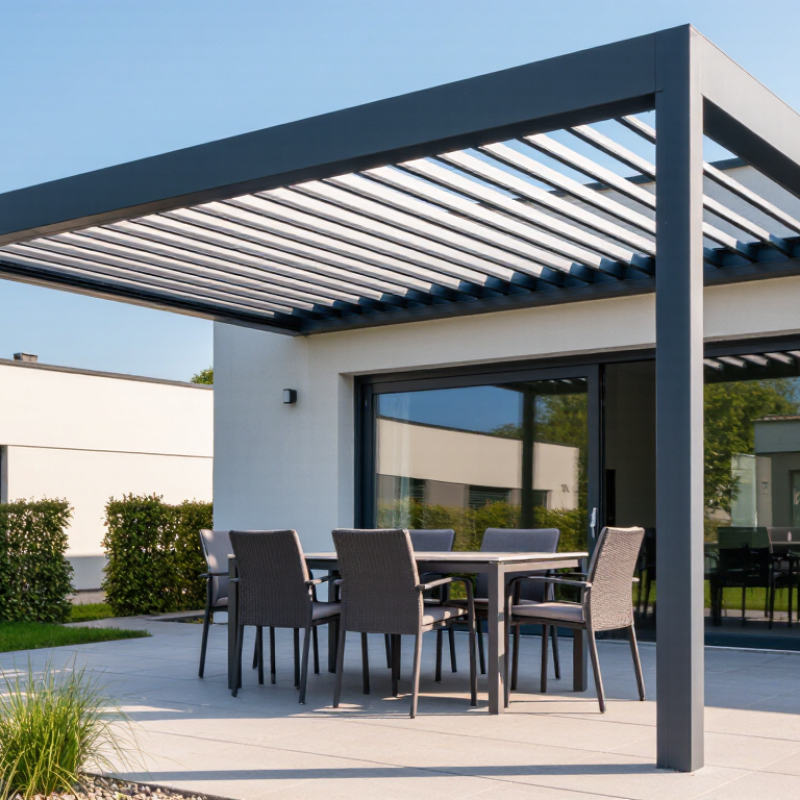
How to Choose Motorised Louvered Pergolas in 2026?

Assess Your Space, Climate, and Intended Use

Start with the site, not the catalogue. Measure the patio’s clear width, projection, and headroom, then note doors, gutters, trees, and the afternoon sun path. NOAA’s 1991–2020 U.S. Climate Normals report provides 30-year averages for local temperature and precipitation. Use those figures to judge whether heat, rain, or seasonal variation will shape daily use.

A south-facing dining area may need more shade than a north-facing walkway.

Measure it twice.

Climate affects both comfort and structure. ASHRAE’s Handbook—Fundamentals gives design weather conditions, including cooling temperatures at 0.4%, 1%, and 2% annual exceedance levels. These values help describe demanding hot-weather conditions; they do not replace a site-specific structural assessment.

In windy or snowy locations, ask a qualified installer to confirm the pergola’s rated wind and snow loads, anchoring, and drainage.

Then check the wind. Think about intended use, too: louvers above a dining table need easy control during passing showers, while a sunny reading nook may benefit from adjustable shade and low-glare lighting.

Be honest about habits. If nobody will adjust the louvers, automation may add cost without much comfort.

I would also leave room for the awkward detail: nearby branches can block rotation, even when a plan looks perfect on paper.

Compare Louver Design, Materials, and Structural Performance

How to Choose Motorised Louvered Pergolas in 2026?

Compare Louver Design, Materials, and Structural Performance

A motorised pergola should balance shade control, drainage, and strength. Start with the louvers. Narrow blades can create finer light adjustments, while wider blades may offer a more open view when tilted. Check how fully they close and where rainwater drains. A useful detail: ask to see the louvers moving, not just a static display. Motors should operate smoothly without loud grinding or uneven movement. Small differences matter.

Tips: Compare blade width, tilt range, and drainage paths. Ask how the system behaves during a power outage. Keep access to the motor and wiring in mind; repairs can be awkward if these are boxed in.

Material affects upkeep and performance. Powder-coated aluminium is generally low-maintenance, but coating quality and drainage details still matter. Timber can feel warmer, though it needs regular care and may move with moisture. For the frame, inspect connection points, post size, and anchoring—not just the headline load rating. Wind and snow demands vary by location, so request documented performance figures for the proposed configuration. A strong frame is not automatically a good fit for every site. Check clearances against nearby walls, and have a qualified installer assess foundations and exposure before ordering.

Evaluate Motors, Controls, and Weather Sensors

A motor should match the louver area, expected use, and local exposure—not just the advertised speed. Ask whether it can handle repeated daily cycles and what happens during a power cut. A manual override is useful. Test it before installation, while access is easy. Listen to the motor in a quiet setting; a small rattle can become tiresome beside a dining table. Also check how smoothly the louvers stop at partial angles. Faster is not always better.

Controls should feel simple enough for a guest to use without a tutorial. A wall switch offers dependable local access, while an app can help when you are away. Weather sensors need careful setup. Rain detection may close the louvers, but confirm the chosen system’s behavior and response time. Wind sensors are different: settings should follow the pergola’s operating guidance, since strong gusts can require a specific louver position. Ask how sensors are tested and what happens if a signal drops. It is easy to focus on smart features and overlook this plain question. Test the system on a calm day, then review its settings after installation.

How to Choose Motorised Louvered Pergolas in 2026? - Evaluate Motors, Controls, and Weather Sensors
Selection Factor Options or Typical Characteristics What to Check Practical Selection Guidance
Motor drive Electric linear actuators and geared motor systems are both used to move louver mechanisms. Confirm the drive is designed for the pergola’s louver geometry, span, and expected operating load. Ask how the system behaves if power is lost. Choose a system tested as part of the complete roof assembly. Do not compare motor force or speed figures without checking how they are measured.
Motor capacity Required capacity depends on louver size, number of moving parts, linkage design, friction, and installation conditions. Request the permitted roof dimensions and configuration for the specified motor, including any limits for multi-bay layouts. Use the supplier’s engineering limits for the exact configuration rather than selecting a motor from a headline force rating alone.
Operating speed and noise Opening and closing times vary with motor speed, louver travel, and mechanism design. Noise also varies by installation. Ask for a demonstration or measured operating time and sound level under comparable conditions. For patios near bedrooms or shared spaces, prioritize smooth movement and low operating noise over the fastest cycle.
Power supply and backup Systems may use a fixed electrical supply; some also offer a backup power option. Check electrical requirements, outdoor wiring protection, service access, and whether the roof can be moved during a power outage. Plan the power route before installation. Treat backup operation as a feature to verify, not an assumed standard.
Control methods Common options include wall controls, handheld remotes, app-based controls, and integration with compatible home-automation systems. Confirm which controls are included, whether multiple users or zones are supported, and what happens if the network or app is unavailable. A wall control or remote can provide a straightforward local option; select app or automation features only when their compatibility and support are clear.
Louver positioning Some controls offer open, closed, and intermediate positions; position accuracy depends on the drive and control system. Check whether the system supports adjustable positions, remembers settings, and stops reliably at the chosen angle. Intermediate positioning is useful for balancing daylight, shade, and airflow. Verify it in a live demonstration if it is important.
Rain sensor A rain sensor can trigger louver movement when it detects precipitation, but the programmed response varies by system. Ask whether the roof closes automatically, how the sensor is mounted, and whether settings can be adjusted or overridden. Automatic closure can help manage light rain, but it does not make the space waterproof in every wind direction or installation.
Wind sensor Wind sensors may use measured wind speed or movement detection, depending on the system. Confirm the trigger logic, response time, sensor placement, and the roof’s stated operating limits in wind. Do not assume a wind sensor makes an open roof safe in strong winds. Follow the product’s operating instructions and local weather guidance.
Snow and ice conditions Snow loads and ice can impose substantial force or prevent louvers from moving; limits are design- and location-specific. Request documented structural design limits for the installed configuration and instructions for snow, freezing rain, and icing. Do not rely on a motor or weather sensor to clear snow or ice. Follow the manufacturer’s instructions, including any requirement to open or secure the roof.
Ingress protection and materials Outdoor electrical components may have stated ingress-protection ratings; ratings differ between motors, controls, and sensors. Check the rating for each exposed component, cable connections, drainage provisions, and suitability for the local climate. Compare component-level specifications rather than treating one rating as applying to the entire pergola.
Drainage and rain management Many louvered roofs use integrated channels and posts to direct water away, but performance depends on design and installation. Ask where water exits, how the roof drains when closed, and what maintenance is needed to keep channels clear. Review drainage details alongside sensor features. Correct installation and clear outlets are essential for intended water management.
Service and maintenance Moving parts, electrical connections, sensors, and drainage paths may need inspection and cleaning. Request a maintenance schedule, troubleshooting instructions, parts availability, and details about service access. Choose a layout that allows inspection of the drive and drainage system without unnecessary dismantling.
Warranty and documentation Coverage can differ for the structure, motor, controls, finish, and installation workmanship. Check warranty duration, exclusions, required maintenance, local service arrangements, and the supplied electrical and structural documents. Compare written terms for each component and confirm that the proposed installation matches the documented configuration.

Note: Specifications and features vary by design and installation. Confirm current technical documents, local electrical requirements, structural limits, and operating instructions before purchase.

Check Installation Requirements, Permits, and Safety Features

Before choosing a motorised louvered pergola, measure the proposed footprint and check how it meets the house, fence, and property boundaries. A level-looking patio may still slope enough to affect drainage or installation. Small details matter. Ask the installer what base, anchors, and clearances the structure requires, and whether existing paving can support its weight.

Permit rules vary by location and project size. Contact your local building department before ordering, especially if the pergola will be attached to the home, include electrical work, or stand in a wind- or snow-prone area. Ask whether plans, inspections, or utility-location checks are required. Requirements can change, so confirm them directly rather than relying on an old contractor estimate. Measure twice.

Safety deserves equal attention. Request documentation for the structure’s wind and snow ratings, and ask how those ratings apply to your site. Motorised louvers need a suitable power connection and protection from moisture; have a qualified professional assess the wiring. Check for pinch points, a reachable manual override, and clear operating instructions. If rain or wind sensors are included, ask how they behave during a power cut. Sensors are useful, but they are not a substitute for securing the space before severe weather. One detail people sometimes miss: nearby doors, lights, or tree branches can obstruct moving louvers. Walk through the full opening range before installation.

How to Choose a Motorised Louvered Pergola in 2026

A practical checklist for installation requirements, permits, and safety features.

The bars count the checklist topics included for each category, not legal requirements or a product rating. Permit rules, structural loads, and electrical requirements vary by location; confirm them with your local authority and a qualified installer.

Compare Total Costs, Warranties, and Long-Term Maintenance

When comparing motorised louvered pergolas, look beyond the purchase price. Add installation, electrical work, drainage, and any required site preparation. A low quote may exclude wiring or weather sensors. Ask each installer to price the same dimensions, controls, and finish. Keep the details in writing. It saves guesswork later.

Warranty length matters, but coverage matters more. Check whether the motor, control system, frame, and coating have separate terms. Ask who pays for labour and removal if a component fails. Exclusions for wind, water ingress, or coastal exposure can change the practical value. Read them closely. A long warranty is not always a generous one. I would treat verbal assurances as useful, but not as proof of coverage.

Maintenance affects the real cost over time. Clear leaves from the gutters and check drainage after heavy rain. Wipe the louvers and inspect moving joints a few times each year. In dusty or salty locations, cleaning may need to be more frequent. Follow the supplied care instructions; harsh cleaners can damage finishes. Budget for occasional service, too. No schedule fits every climate, and that part is easy to underestimate.

FAQS

What should I compare when choosing louver blades?

Compare blade width, tilt range, and how fully the louvers close. Narrow blades can offer finer light control. Wider blades may preserve more of the view.

How can I check the motor before buying?

Ask to operate the louvers in person. Watch for uneven movement or loud grinding. Small differences matter.

How do I know where rainwater will drain?

Ask the installer to show the drainage path with the louvers closed. Check where water exits and whether nearby walls or paving could be affected.

Which frame material needs less upkeep?

Powder-coated aluminium is generally low-maintenance, but coating quality still matters. Timber feels warmer and may need regular care as moisture changes.

What structural details should I inspect?

Look at post size, connections, anchors, and documented wind or snow performance. A high load rating alone may not suit your site.

What should I check before installation?

Measure the footprint, nearby walls, boundaries, and opening range. Ask whether the paving, base, and anchors can support the structure. Measure twice.

Do I need to check local permit requirements?

Yes. Contact your local building department before ordering, especially for attached structures or electrical work. Requirements vary, so an old estimate may be wrong.

What safety features are worth asking about?

Check for a reachable manual override, clear instructions, and protected wiring. Ask how sensors behave during a power cut. Sensors are not a weather guarantee.

What could obstruct the louvers?

Nearby doors, lights, and tree branches may interfere. Walk through the full opening range before installation. I might be overchecking, but moving parts need space.

Conclusion

Choosing Motorised Louvered Pergolas in 2026 starts with understanding your outdoor space, local climate, and how you plan to use the area. Consider the pergola’s size and orientation, exposure to wind and rain, and whether you want shade, ventilation, or shelter throughout the year. Compare louver designs and materials for durability, structural strength, and suitability for your conditions.

Next, assess the motor, control options, and weather sensors to find a system that is convenient and responsive. Confirm installation needs, any applicable permits, and safety features before making a decision. Finally, look beyond the initial price: compare the total cost, warranty coverage, and expected maintenance over time. Evaluating these factors together can help you choose a pergola that fits your space, performs reliably, and remains practical for years to come.


Ethan

Ethan

Ethan is a dedicated marketing professional with a strong understanding of the company’s products, services, and customers. With a combination of strategic insight, industry knowledge, and clear communication skills, he helps present complex product information in a practical and engaging way. As a......