China’s Aluminium Slide and Fold Doors suppliers serve projects ranging from compact apartments to wide hotel terraces. Choosing a manufacturer involves more than comparing frame prices. Buyers should examine tested air and water resistance, thermal performance, hardware durability, finish options, production capacity, and export support.
Performance matters. The International Energy Agency’s 2023 Global Status Report for Buildings and Construction says buildings accounted for about 30% of global final energy use in 2022. The U.S. Department of Energy also notes that heat gain and loss through windows can represent 25% to 30% of household heating and cooling energy use. These figures do not measure folding doors alone, but they show why glazing, seals, frame design, and installation deserve careful scrutiny. A slim threshold may look elegant; a poorly detailed one can invite drafts or water.
This guide introduces ten China-based suppliers of Aluminium Slide and Fold Doors, with attention to product range, customization, quality controls, and communication. Company claims should be checked against project references, independent test reports, and the specifications for each order. No shortlist is perfect. Public product pages may omit test conditions, and attractive catalog photos cannot confirm site performance. Treat the comparison as a starting point, then request drawings, sample finishes, and documented test results before making a decision.
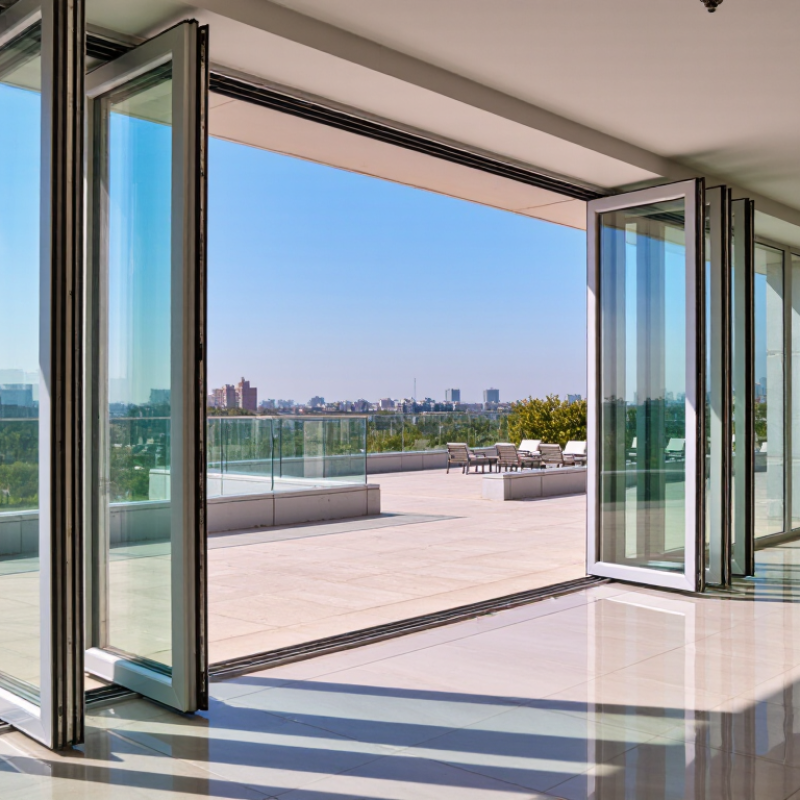
In China, an aluminium slide-and-fold door supplier is more than a profile maker. A reliable supplier coordinates alloy selection, thermal-break design, glass, hardware, fabrication, and installation guidance. Every panel must fold smoothly, align evenly, and keep water out at the meeting rails. Details matter.
Ask for alloy and temper records, profile drawings, coating specifications, and test reports for the exact door configuration. Check how the factory inspects corner joints, drainage channels, locks, and rollers during repeated operation. A showroom sample may look flawless, but it cannot prove consistency across a production batch. That gap is easy to miss. The World Green Building Council’s 2019 report, Bringing Embodied Carbon Upfront, estimates that buildings account for 39% of global energy-related carbon emissions, with 11% associated with materials and construction. This sector-wide figure is not a door-specific footprint. Still, it makes material records and scrap controls worthwhile questions.
Compare documented thermal, air, and water performance against the project’s needs, not broad marketing claims. Request test evidence for the proposed glass, frame, and hardware combination. Also confirm replacement-part access and warranty coverage in writing. One caveat: climate, opening size, and installation quality can change the right specification. A practical check is to review a project-matched sample with the installer before production. Suppliers differ, even on paper.
A practical comparison framework: the 10 dimensions below help assess suppliers. They are evaluation criteria, not a ranking of named companies.
| No. | Evaluation Dimension | What to Check | Useful Evidence |
|---|---|---|---|
| 1 | Product and configuration range | Whether the supplier offers the required number of panels, opening direction, folding arrangement, threshold type, and project-specific dimensions. | Current product drawings, configuration options, and a written schedule confirming the proposed design. |
| 2 | Aluminium profile specification | Profile dimensions, alloy and temper, wall thickness, thermal-break construction where applicable, and compatibility with the intended spans and loads. | Section drawings, material specifications, and calculations or test documentation for the proposed system. |
| 3 | Hardware and operating system | Hinges, rollers, tracks, locks, handles, seals, and their suitability for the panel size, expected usage, and site conditions. | Hardware specifications, load limits where stated, maintenance guidance, and replacement-part availability. |
| 4 | Air, water, and structural performance | Performance requirements for the project and whether test results apply to the same frame, panels, glazing, hardware, and installation details. | Reports identifying the tested specimen and methods, such as EN 1026/EN 1027/EN 12211 or ASTM E283/E331/E330, as applicable. |
| 5 | Thermal and glazing options | Available glazing build-ups, glass thickness limits, thermal-break options, and the method used to state whole-window thermal performance. | Glazing schedules and project-relevant U-factor or U-value documentation; confirm the rating covers the complete door assembly where required. |
| 6 | Finishes and corrosion protection | Specified coating or anodized finish, colour consistency, exposed-edge treatment, and suitability for the building location and environment. | Finish specification, approved samples, care instructions, and any applicable coating or durability test records. |
| 7 | Manufacturing and quality controls | How dimensions, corner joints, drainage, seals, glazing fit, and operating adjustments are checked during production. | Inspection plans, sample quality records, production checks, and confirmation of final pre-shipment inspection procedures. |
| 8 | Technical documentation and compliance | Whether drawings, installation instructions, product specifications, and required market documentation match the destination and project requirements. | Document register, installation details, test reports, and applicable declarations or certificates for the relevant market. |
| 9 | Packaging and shipment readiness | Protection for glazed panels and finished surfaces, labeling, packing method, and coordination of shipment documents and delivery requirements. | Packing specification, shipment inspection checklist, and sample photographs of comparable packaging. |
| 10 | Installation and after-sales support | Availability of installation guidance, technical responses, spare parts, warranty terms, and a clear process for handling defects or adjustments. | Written warranty conditions, service contact process, parts list, and installation or maintenance instructions. |
Compare alloy grade, temper, profile-wall thickness, thermal breaks, and drainage paths. Small details matter.
Ask for recent reports matching the exact model. Check air leakage, water penetration, wind load, and thermal performance.
Request records for incoming materials, coating thickness, dimensional tolerances, and corner-joint strength. Inspect a full-size sample, too.
No. Test roller movement, locks, seals, and drainage. One sample cannot reveal every batch issue.
Confirm available sizes, finishes, handles, screens, opening direction, and sill details. Get limits in writing.
Use the same opening dimensions, glass specification, and hardware requirements. Also compare lead times, packing, and warranty terms.
Confirm panel weight, hardware compatibility, frame rigidity, track drainage, and installation clearances. Wider panels need careful checking.
It can help limit heat transfer, but results depend on glazing, installation, and climate. I may be overcautious, but verify the full assembly.
Verify final site measurements, drawings, finish samples, and glass details. Samples can differ slightly. That part is easy to overlook.
This article explores what distinguishes a reliable Aluminium Slide and Fold Doors supplier in China, from consistent product quality and engineering expertise to responsive communication and dependable delivery. It outlines practical criteria for evaluating suppliers, including material specifications, hardware and finish options, customization support, production capacity, quality-control processes, and experience serving different project requirements.
Readers will find an overview of ten notable supplier profiles, followed by a comparison of product ranges, customization possibilities, and manufacturing capabilities. The article also explains how to verify a potential partner by reviewing product documentation, assessing samples, clarifying lead times and service arrangements, and asking focused questions about production and quality checks. These insights help buyers compare options methodically and select a supplier whose capabilities, communication, and working practices align with their project needs.