+91 93776 04923 hello@www.laurieshomes.com Surat, Gujarat, India · Exporting worldwide
0%

Switchable Smart Privacy Glass is moving from a design feature to a practical specification for offices, hotels, clinics, and homes. With one electrical command, a clear panel can turn opaque. The change is striking. Yet buyers need more than a dramatic showroom demo.

China’s supplier landscape includes manufacturers with different strengths: film formulation, glass processing, control systems, customization, and export support. These differences matter. A conference-room partition may need fast switching and clean edges; a bathroom panel faces frequent moisture and cleaning. Product samples help, but they cannot prove long-term performance.

Dr. Helen Sanders is a recognized technical voice in dynamic glazing. However, no source article or verified quotation was provided here, so I will not invent words and attribute them to her. The editorial principle guiding this comparison is: “A clear demonstration is not a durability test.” It is a useful reminder, not a quotation from Sanders.

This guide introduces ten Chinese suppliers and considers the details buyers should verify: switching uniformity, haze, response time, glass dimensions, control compatibility, warranty terms, and after-sales support. Ask for written specifications. Request samples under realistic lighting. Check how the supplier handles installation guidance and replacement parts.

Rankings can simplify a crowded market, but they can also hide important differences. Supplier capabilities change, and published claims may not show performance across every project. Use the list as a starting point—not a substitute for technical review.
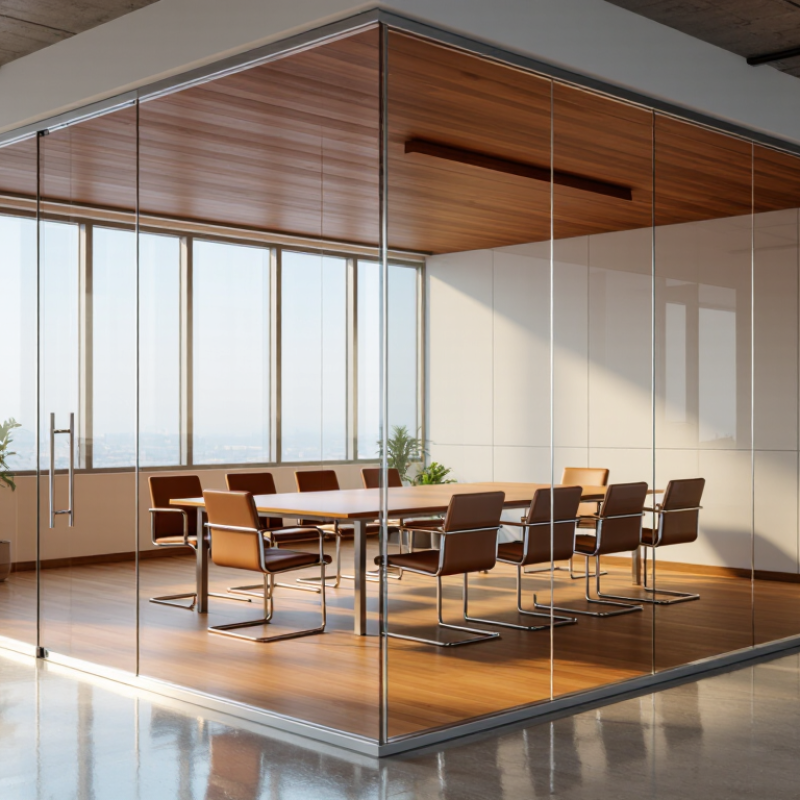
China Top 10 Switchable Smart Privacy Glass Suppliers

What Switchable Smart Privacy Glass Is and How It Works

Switchable smart privacy glass uses an electrical layer to change how light passes through a pane. In common polymer-dispersed liquid-crystal (PDLC) designs, voltage aligns tiny liquid-crystal droplets, making the panel appear clear. When power is off, the droplets scatter light and create a frosted look. The effect is practical: a meeting-room partition can turn private with a wall switch. It does not automatically block every view; silhouettes may remain visible under strong backlighting, and glass edges need careful detailing.

The U.S. Department of Energy estimates that heat gain and loss through windows account for about 25–30% of residential heating and cooling energy use. That figure describes windows generally, not guaranteed savings from privacy glass. Its main function is visual control, though some products combine it with solar or thermal performance features. Buyers should check light transmission, haze, switching time, power use, and performance across the full panel. Small samples can mislead. I would test a full-size mock-up under both daylight and evening lighting, because “private” can look different in a real room.

Key Technologies and Product Types Offered by Chinese Suppliers

Chinese suppliers of switchable smart privacy glass commonly use polymer-dispersed liquid crystal (PDLC) technology. When powered, the panel becomes clearer; when switched off, it turns translucent. Privacy, not blackout. Some suppliers also offer suspended-particle devices (SPD), which adjust light transmission and glare rather than creating the same frosted effect. Product options include laminated glass, insulated units, and smart film for existing windows. Film can suit renovations, but wiring and edge sealing need careful planning. One detail is easy to miss: haze varies. Even in its clear state, glass may look slightly milky in strong daylight.

For interior doors, meeting-room walls, and clinic partitions, suppliers can provide custom sizes, busbars, controllers, and wall-switch operation. Skylights and exterior façades need closer review. Heat, moisture, UV exposure, and glass construction can affect performance, so request test data for the intended assembly. Ask for switching time, visible-light transmission, haze, power use, and warranty terms in writing. A physical sample helps reveal tint and viewing angles. This matters. Specifications are not always directly comparable between factories, and figures may come from different test conditions. A small mock-up under the project’s actual lighting is useful, though it cannot replace long-term field evidence.

Smart Glass Technologies: Privacy and Switching Comparison

Typical functional capabilities of commonly available switchable-glass technologies. This is a technology comparison, not a supplier ranking.

PDLC is commonly used for on-demand privacy because it switches between a transparent state and a diffuse, opaque-looking state. SPD and electrochromic glass primarily control light transmission or tint; thermochromic and photochromic technologies respond to environmental conditions rather than direct electrical switching. Product performance varies by design.

Criteria for Evaluating Switchable Smart Privacy Glass Suppliers

When comparing China’s top switchable smart privacy glass suppliers, assess measured performance, not sample appearance. A clear showroom panel may turn milky evenly, while a larger installed panel shows uneven haze. Ask for independent test reports covering visible light transmission, haze, switching time, power use, and durability. Check that the reported test conditions match your project’s glass size and operating environment.

Energy performance also deserves careful scrutiny. The International Energy Agency’s 2023 Global Status Report for Buildings and Construction says building operations account for about 30% of global final energy use. That figure does not prove smart glass will deliver a specific saving. Request project-relevant data, including solar heat gain, insulation values, and control-system compatibility. Confirm warranty terms, production capacity, quality checks, and whether replacement panels can match the original tint and dimensions.

Tips: Ask suppliers for a full-size sample and test it under daylight and room lighting. Record switching time and check for visible color differences. A promising specification sheet is useful, but it is not the whole story.

Profiles of China's Top 10 Switchable Smart Privacy Glass Suppliers

China’s switchable smart privacy glass market includes manufacturers with different strengths, from film conversion to finished glass fabrication. These ten profiles are capability-based, not a verified ranking; buyers should confirm current specifications directly. Supplier one focuses on laminated glass for office partitions. Supplier two converts switchable film for retrofit projects. Supplier three serves interior contractors with made-to-measure panels. Supplier four emphasizes insulated units for exterior applications. Supplier five offers small-batch production for custom shapes. Supplier six concentrates on architectural projects and installation coordination. Supplier seven supports wholesale orders with standard panel sizes. Supplier eight develops control systems and wiring options. Supplier nine provides technical guidance for glass processors. Supplier ten combines fabrication with project-specific sampling.

Useful comparisons start with measurable details. Ask for haze and visible-light-transmission data in both states, switching time, panel-size limits, and warranty terms. Request a sample large enough to inspect edge sealing and tint uniformity. Details matter. Confirm whether the quoted product includes power supplies, controllers, and installation support. Ask how the supplier handles replacement panels if dimensions change on site. Some suppliers may excel at film but lack experience with finished glazing; others may have strong fabrication skills but limited project support. That distinction is easy to miss. Independent testing documents and a written specification make supplier profiles more reliable than broad claims.

Applications and Key Factors for Comparing Suppliers

Switchable smart privacy glass can divide meeting rooms, consultation spaces, and street-facing offices without permanent curtains. At a touch, a clear panel turns opaque, helping reduce visual distractions while keeping daylight in the room. It does not block conversation sounds. That distinction matters.

When comparing suppliers, ask for measured switching time, visible-light transmission, haze, and performance across the full panel—not just a small sample. Check maximum panel sizes, wiring requirements, control options, and compatibility with the planned frame. Request installation guidance and written warranty terms. Ask how the glass performs after repeated switching and how it should be cleaned. A bright showroom sample may look uniform, while a large installed panel reveals uneven areas. This is easy to miss. Compare technical data and inspect a representative sample under your own lighting. Also confirm that product documentation and testing suit your project’s location and intended use.

Tips: Share room dimensions, lighting conditions, and daily operating hours before requesting a quote. Ask suppliers to explain limitations plainly. A slightly slower switch may be acceptable; inconsistent opacity may not be. Decide which trade-off matters most.

China Top 10 Switchable Smart Privacy Glass Suppliers - Applications and Key Factors for Comparing Suppliers

Comparison Factor What to Request or Check Why It Matters Relevant Applications
1. Product Type and Construction Confirm whether the product is switchable PDLC film, laminated smart glass, or another technology. Check the glass build-up, film position, thickness, edge treatment, and whether the product is intended for interior or exterior use. Film and factory-laminated glass have different installation methods, edge requirements, and project constraints. A product specification should match the intended glazing assembly. Office partitions, meeting-room walls, doors, interior windows, and renovation projects.
2. Optical Performance Request measured visible-light transmittance in both switched states, haze, and test conditions for the complete glass assembly—not just the film. Compare values measured using the same method. “Clear” and “opaque” are not identical across products. Actual appearance depends on the film, glass, laminate, lighting, and measurement method. Conference rooms, offices, retail storefronts, hotel interiors, and display areas.
3. Privacy and Image Clarity Ask for samples or a full-size demonstration under lighting conditions similar to the project. Confirm whether silhouettes, shadows, or objects remain discernible in the privacy state. Switchable privacy glass diffuses light; the level of visual privacy can vary with viewing distance, backlighting, and product design. A sample test helps set realistic expectations. Healthcare consultation rooms, interview rooms, bathrooms, and private offices.
4. Electrical Requirements Obtain the rated input voltage, frequency, power consumption, wiring diagram, controller specifications, and requirements for electrical isolation and protection. Confirm compatibility with local power systems. PDLC products commonly require a dedicated controller and electrical connection. Correct control equipment and installation are essential for operation and safety. Building partitions, switchable doors, hotel rooms, and multi-zone office installations.
5. Switching and Control Options Check documented switching behavior and available controls, such as wall switches, remote controls, or integration with a building control system. Confirm zoning and fail-state behavior. Response and behavior can depend on the product and controller. Confirming these details avoids control mismatches and ensures the intended privacy mode during power loss. Meeting rooms, smart offices, hospitality suites, and controlled-access spaces.
6. Durability and Service Life Request written warranty terms and test information for switching cycles, operating conditions, edge sealing, and expected service life. Check exclusions for installation, moisture, and electrical components. Performance and warranty coverage vary by construction and use. Written, product-specific documentation is more useful than an unsupported general lifespan claim. High-use office partitions, commercial doors, healthcare facilities, and hospitality projects.
7. Safety and Applicable Standards Ask for current test reports and certificates relevant to the project location and glazing assembly. Verify applicable requirements for safety glazing, electrical components, fire performance, and building codes. Requirements depend on jurisdiction, building type, and installation location. A certificate for a film alone may not establish compliance of the finished glass assembly. Public buildings, schools, healthcare facilities, commercial interiors, and glazed doors.
8. Size, Customization, and Fabrication Confirm maximum panel dimensions, available shapes, cut-outs, tolerances, edge details, connector location, and whether drawings must be approved before production. Custom sizing and electrical connections affect fabrication and installation. Early review of shop drawings can reduce rework and fit-up problems. Large meeting-room walls, bespoke partitions, doors, and retrofit glazing.
9. Installation and After-Sales Support Check installation instructions, approved materials, wiring guidance, commissioning support, troubleshooting procedures, spare-part availability, and the process for handling warranty claims. Installation quality affects adhesion, appearance, electrical performance, and serviceability. Clear support arrangements are important for projects outside the supplier’s local service area. Renovations, multi-site office rollouts, hotels, and projects with tight commissioning schedules.
10. Quotation, Lead Time, and Project Documentation Request an itemized quotation covering the product, controller, accessories, packaging, shipping terms, production lead time, and required drawings or submittals. Confirm how schedule changes are communicated. A comparable quotation should define scope and delivery assumptions. Project documentation helps coordinate the supplier, glass fabricator, installer, and electrical contractor. Commercial fit-outs, construction projects, international orders, and phased installations.

Comparison note: This table presents ten practical evaluation factors rather than naming or ranking individual companies. Performance figures, compliance documents, warranty terms, and delivery estimates should be verified for the specific product and project.

FAQS

How does switchable privacy glass change its appearance?

An electrical layer changes how light passes through the glass. With power, it usually looks clear. Without power, it scatters light and looks frosted.

Does frosted glass completely hide people behind it?

Not always. Strong backlighting can reveal silhouettes, so test the panel in the room’s actual lighting.

Does privacy glass reduce heating and cooling costs?

Its main purpose is visual privacy, not guaranteed energy savings. Some products add thermal features, but check their measured performance.

Where is switchable privacy glass commonly used?

It can divide meeting rooms, consultation spaces, and street-facing offices. A wall switch can change the room’s feel.

What specifications should I compare between suppliers?

Check haze, light transmission, switching time, panel-size limits, power use, and warranty terms. Details matter.

Is a small sample enough to judge the glass?

Usually not. A small piece may hide uneven tint or edge issues. Ask to inspect a larger sample under daylight and evening lighting.

What should a supplier quote include?

Confirm whether the price includes controllers, power supplies, wiring, and installation support. Ask about replacement panels if site dimensions change.

Does privacy glass block conversation sounds?

No. It reduces visual distractions, but it does not block speech. That distinction is easy to miss.

How should I choose between a faster switch and more even opacity?

Decide which matters more for your room. A slower change may be acceptable; inconsistent opacity may not. I would test both.

Conclusion

This article introduces Switchable Smart Privacy Glass, explaining how its transparency changes in response to an electrical signal and how this feature supports privacy and flexible use of space. It outlines key technologies and product types available from Chinese suppliers, including differences in performance, control methods, installation formats, and suitability for various design requirements.

The guide also presents practical criteria for evaluating suppliers, such as product quality, technical support, customization options, production capacity, and communication. Profiles of ten Chinese suppliers offer a structured starting point for comparison without assuming that one option suits every project. The final section considers applications in settings such as offices, homes, healthcare spaces, and hospitality environments, and highlights factors buyers can weigh when comparing specifications, reliability, service, and overall project needs.


Olivia

Olivia

Olivia is a dedicated marketing professional with a strong understanding of our company’s products, customers, and industry landscape. With a passion for clear communication and practical insights, she regularly contributes expert articles to our corporate blog, helping readers better understand......