Choosing the best Aluminium Casement Windows from China requires more than comparing profile thickness or factory prices. Performance depends on thermal breaks, glazing, drainage, hardware, installation, and verified testing. The U.S. Department of Energy reports that windows can influence about 25–30% of residential heating and cooling energy use. That figure makes air leakage and glass selection practical concerns, not marketing details.
China offers a deep aluminium supply chain. The International Aluminium Institute reported that China produced approximately 58% of global primary aluminium in 2023. This capacity supports competitive window manufacturing, but scale does not guarantee consistent quality. Buyers should request tested U-values, air-permeability results, water-tightness ratings, wind-load data, and production records. Compliance with GB/T 8478-2020 matters for Chinese projects, while EN 14351-1 or equivalent testing helps international buyers compare performance. The best suppliers can show controlled powder coating, accurate corner crimping, durable gaskets, and inspection photographs from real projects.
Building-science expert Joseph Lstiburek offers a useful warning: “Windows are holes in the wall.” His point remains uncomfortable but practical. Even an excellent frame can fail through poor installation. Grand View Research and other market reports identify energy efficiency, durability, and replacement demand as major aluminium window trends. Yet reports cannot replace a factory audit. A polished catalogue may hide weak drainage. I would inspect sample corners, operate the locks repeatedly, and test a full-size unit before ordering. Small details matter. This guide examines which Chinese Aluminium Casement Windows combine credible testing, stable manufacturing, weather resistance, and sensible long-term value.
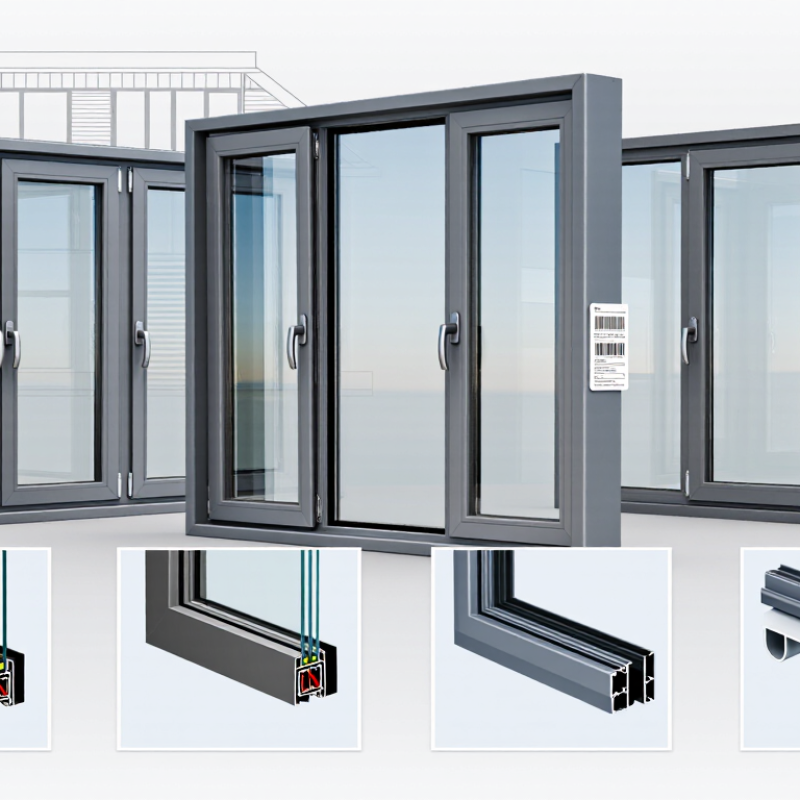
Aluminium casement windows are hinged windows that open outward from one side. A handle controls the sash, allowing smooth ventilation and easy cleaning. Their slim aluminium frames create a wider glass area than many traditional window styles. They also suit modern homes, offices, and coastal buildings.
The best aluminium casement windows from China should combine accurate fabrication, suitable glass, and dependable hardware. Look for thermally broken aluminium profiles, especially in hot or cold climates. These profiles reduce heat transfer through the frame. High-quality seals help limit drafts, rain, and outside noise. In real projects, drainage details matter as much as appearance. Poor drainage can cause water stains after heavy rain. Certified testing is useful, but careful installation remains essential. A strong product can still perform badly when the frame is not aligned. That point is easy to underestimate.
Tips: Check profile thickness, glass specification, air-tightness, and warranty terms before ordering. Ask for section drawings and sample corners. Test the handle several times. It should feel firm, not rough. Confirm the opening direction and screen position early. Measurements should be taken after checking the finished wall opening. Some specifications look impressive on paper, yet they may not match local weather. A small site review can prevent an expensive mistake.
Aluminium casement windows from China can offer a practical balance between design flexibility, performance, and cost. Many manufacturers produce slim profiles with thermal breaks, multi-point locks, and double or triple glazing options. These features help reduce heat transfer, outside noise, and air leakage in suitable climates.
China also has a broad manufacturing base for customized window systems. Buyers can request different frame depths, opening directions, glass specifications, powder-coated finishes, and drainage details.
In project work, accurate drawings and sample checks often prevent expensive installation problems. A reliable supplier should provide profile data, hardware details, test reports, and clear production tolerances.
Factory inspection can also confirm welding quality, corner joints, coating consistency, and packaging methods.
The process is not flawless. A low quotation may hide thinner aluminium, weak hardware, or incomplete technical support. Shipping damage and measurement errors can create further delays.
I would compare several technical offers, not only prices, and ask for a physical sample before approving production. Certifications should match the destination market, while wind-load, water-tightness, and thermal requirements need professional review.
China can be a strong sourcing option, but supplier verification remains essential. Small details matter.
Chinese aluminium casement windows are designed around climate, building orientation, and opening size. The frame usually begins as an aluminium extrusion, shaped through a precision die and cut by CNC equipment. A thermal break, often made from reinforced polyamide, separates the exterior and interior profiles. This reduces heat transfer through the frame. Low-emissivity glass, warm-edge spacers, and multi-point hardware are then matched to the window system.
The International Energy Agency reported that buildings used about 30% of global final energy in 2022. The U.S. Department of Energy also states that windows can influence 25–30% of household heating and cooling energy use. These figures explain why Chinese manufacturers focus on air tightness, drainage, and thermal performance, not only appearance. Qualified factories commonly test casement units for air leakage, water penetration, wind resistance, and operating cycles. Production should follow applicable standards, including China’s GB/T 8478 for aluminium alloy windows and doors.
Powder coating or anodising follows cleaning and surface treatment. Inspectors check film thickness, colour consistency, corner joints, and hardware alignment. Small errors matter. A poorly adjusted hinge can create a visible gap after installation.
I would also question impressive laboratory numbers when installation training is weak. Factory performance is not site performance. Reliable suppliers provide test reports, production samples, section drawings, and traceable quality records before volume production.
The best Chinese aluminium casement windows combine precise fabrication with practical performance. Their frames should use a reliable thermal break to reduce heat transfer through the aluminium sections. This matters in both hot and cold climates. Look for insulated glazing with low-emissivity coatings, suitable gas filling, and correctly sized spacers. Glass selection should reflect local wind, noise, and sunlight conditions.
Strong casement windows also need durable hardware. Multi-point locks, stainless steel friction stays, and adjustable hinges support smooth operation over many years. Compression seals should sit evenly around the sash. Poor seals can create drafts, water marks, and difficult closing. Powder-coated surfaces offer useful resistance against fading and corrosion, but coating thickness and surface preparation still require inspection. Color alone proves little.
Manufacturing quality depends on more than attractive samples. Ask for section drawings, test reports, drainage details, and clear tolerance data. Factory checks should include corner joints, sash alignment, glass installation, and water drainage. On site, correct anchoring and perimeter sealing remain essential. A well-made window can perform badly after careless installation. From practical inspections, I have found small drainage mistakes surprisingly common. That is worth remembering. Request production photos or a pre-shipment inspection when possible. Some suppliers communicate quickly but document poorly, so reliability should be judged by evidence, not promises.
| Evaluation Dimension | Recommended Benchmark | Typical High-Performance Configuration | Why It Matters |
|---|---|---|---|
| Frame Construction | Thermally broken aluminium frame | Polyamide thermal barrier, commonly about 20–30 mm wide | Reduces heat transfer through the metal frame and limits interior condensation. |
| Aluminium Alloy | Architectural aluminium suitable for extrusion and powder coating | 6063-series aluminium is widely used for window profiles; alloy and temper should be confirmed in technical documents | Supports accurate extrusion, good surface quality, corrosion resistance and structural consistency. |
| Profile Wall Thickness | Appropriate thickness for the window size, wind exposure and design load | Residential systems often use approximately 1.4–2.0 mm profile walls, subject to engineering calculations | Adequate section strength helps prevent frame deflection and maintains seal compression. |
| Glazing Options | Double glazing as a minimum for energy-conscious projects | 24–32 mm insulating glass unit, low-emissivity coating and argon filling; triple glazing for colder climates | Improves thermal insulation, acoustic comfort and interior surface temperature. |
| Glass Safety | Safety glass where required by local building regulations | Tempered glass for impact-prone locations; laminated glass where fall protection or improved security is needed | Reduces injury risk and can improve resistance to accidental impact or forced entry. |
| Thermal Performance | Whole-window U-value of approximately 1.4–1.8 W/m²·K for many energy-efficient projects | Thermal-break frame combined with low-E insulating glass and warm-edge spacers | A lower U-value indicates reduced heat loss, although the final value depends on window size and glazing ratio. |
| Air Permeability | Target Class 4 under EN 12207 or an equivalent local test method | Continuous EPDM gaskets, accurately joined corners and adjustable locking points | Limits drafts, dust infiltration and uncontrolled energy loss. |
| Water Tightness | Target Class 8A or 9A under EN 12208, where applicable | Sloped drainage paths, correctly positioned weep holes and compression seals | Helps prevent rainwater from entering the room during wind-driven storms. |
| Wind Resistance | Project-specific structural verification; Class C3–C5 may be relevant depending on exposure | Reinforced mullions or larger profile sections for wide, tall or coastal installations | Maintains safe operation and reduces deflection under wind pressure. |
| Hardware | Corrosion-resistant, adjustable hardware compatible with the sash weight | Stainless-steel or corrosion-resistant locking components, friction stays and multi-point locking | Provides smooth operation, consistent sealing pressure and improved security. |
| Surface Finish | Powder coating or anodising specified for the intended environment | AAMA-rated or equivalent powder coating for general use; enhanced pretreatment for coastal conditions | Protects the aluminium from weathering and helps retain colour and appearance. |
| Drainage Design | Dedicated drainage channels with unobstructed exterior outlets | Protected weep holes and internal rebates designed to direct water outward | Reduces water accumulation inside the frame and protects surrounding finishes. |
| Quality Verification | Request test reports, drawings, samples and inspection records before production | Independent laboratory testing, pre-shipment inspection and documented installation instructions | Confirms that the supplied window matches the stated performance rather than relying only on catalogue claims. |
Note: Performance classes and U-values are target benchmarks, not universal specifications. Final requirements should be selected according to the project location, window size, local building regulations and the applicable test standard.
Selecting a reliable Chinese window manufacturer requires more than comparing quotations. The U.S. Department of Energy reports that windows can cause 25–30% of residential heating and cooling energy use. Therefore, request verified U-values, solar heat gain coefficients, air leakage results, and water resistance data. These figures matter more than attractive catalogue images.
A dependable factory should provide traceable aluminium alloy certificates, coating records, and hardware specifications. Ask whether its products are tested under EN 14351-1 or the standards required in your market. Request recent laboratory reports, not copied documents. The Global Status Report for Buildings and Construction states that buildings consume about 30% of global final energy. Better window performance can support lower operational demand, although installation quality remains critical.
Inspect production details through a live video tour or an independent audit. Check gasket corners, drainage holes, frame joints, glass blocks, and protective packaging. A polished sample can still mislead. Small defects often appear after shipment. Ask for batch photographs and random pre-shipment inspections. Review warranty terms, replacement procedures, and response times in writing. The cheapest offer may exclude testing, screens, or suitable marine-grade finishes. That comparison is easy to miss. Reliable cooperation also needs clear drawings, approved samples, and payment stages linked to inspection results.
They are hinged windows that open outward from one side. A handle controls the sash. This design supports ventilation and easier cleaning. Slim frames also create a wider glass area.
Aluminium frames are slim, durable, and suitable for modern homes, offices, and coastal buildings. They can provide strong daylight and smooth operation. However, appearance alone proves little.
Choose thermally broken aluminium profiles. They reduce heat transfer through the frame in hot or cold climates. This feature should match local weather conditions.
Consider insulated glazing with a low-emissivity coating, suitable gas filling, and correctly sized spacers. Glass should reflect local wind, sunlight, and noise conditions. A standard option may not suit every project.
Look for multi-point locks, adjustable hinges, and durable friction stays. The handle should feel firm during repeated testing. Rough movement may indicate poor adjustment or hardware quality.
Request section drawings, test reports, drainage details, and tolerance data. Inspect corner joints, sash alignment, glass blocks, and protective packaging. Evidence beats promises.
Drainage holes help remove rainwater from the frame. Poor drainage can leave water stains after heavy rain. Drainage matters.
Correct anchoring, frame alignment, and perimeter sealing are essential. A well-made window can still leak or close poorly after careless installation. This risk is easy to underestimate.
Check profile thickness, glass details, airtightness, warranty terms, opening direction, and screen position. Measure the finished wall opening, not an unfinished space. Ask for a sample corner and production photographs.
Not always. A low quotation may exclude testing, screens, suitable finishes, or inspection services. Compare specifications, replacement procedures, payment stages, and written response times. I would still review the final details twice.
Aluminium Casement Windows are side-hinged windows designed to open outward, providing excellent ventilation, clear views, and effective control over natural light. Their aluminium frames are lightweight, strong, corrosion-resistant, and suitable for modern residential and commercial buildings. Choosing windows from China can offer a broad range of designs, finishes, glass options, and customization services, often supported by efficient manufacturing and competitive pricing. However, quality should remain the main consideration rather than cost alone.
The best Chinese Aluminium Casement Windows are made through precise engineering, careful material selection, advanced surface treatment, and strict quality inspections. Important features include durable aluminium profiles, secure hardware, smooth opening mechanisms, reliable weather seals, thermal insulation, sound reduction, and energy-efficient glazing. To select a dependable manufacturer, buyers should review production capabilities, technical specifications, quality-control procedures, customization experience, packaging standards, and communication efficiency. Clear contracts, product samples, test reports, and after-sales support can also help ensure that the chosen windows meet project requirements and provide long-term performance.