Choosing the right supplier for Guillotine Vertical Sliding Windows requires more than comparing product photos and advertised prices. In 2026, buyers should examine manufacturing experience, material quality, testing records, and after-sales support. A reliable supplier should explain frame systems, glass specifications, counterbalance hardware, drainage design, and expected service life in clear language.
This guide explores leading suppliers through practical evaluation criteria. It considers their production capabilities, project experience, customization options, and communication standards. Site references can reveal details that brochures often miss. Look closely at corner joints, sash movement, seals, and surface finishes. Ask whether replacement parts remain available after installation. That detail matters.
Energy performance matters too.
Suppliers should provide credible thermal and acoustic data, not vague claims. Independent test reports, factory quality procedures, and relevant certifications can strengthen trust. However, documentation alone cannot guarantee a smooth project. Installation guidance, packaging quality, delivery control, and responsive technical support also influence results.
The 2026 market is changing quickly. Some suppliers offer impressive technology but limited project history. Others have strong experience but slower customization. No ranking is perfect. Regional climate, building design, budget, and maintenance expectations can change the best choice. This overview therefore avoids treating one supplier as suitable for every project. Instead, it helps architects, contractors, and property owners ask sharper questions before signing a contract. Small oversights can become expensive. Careful comparison remains the safer approach.
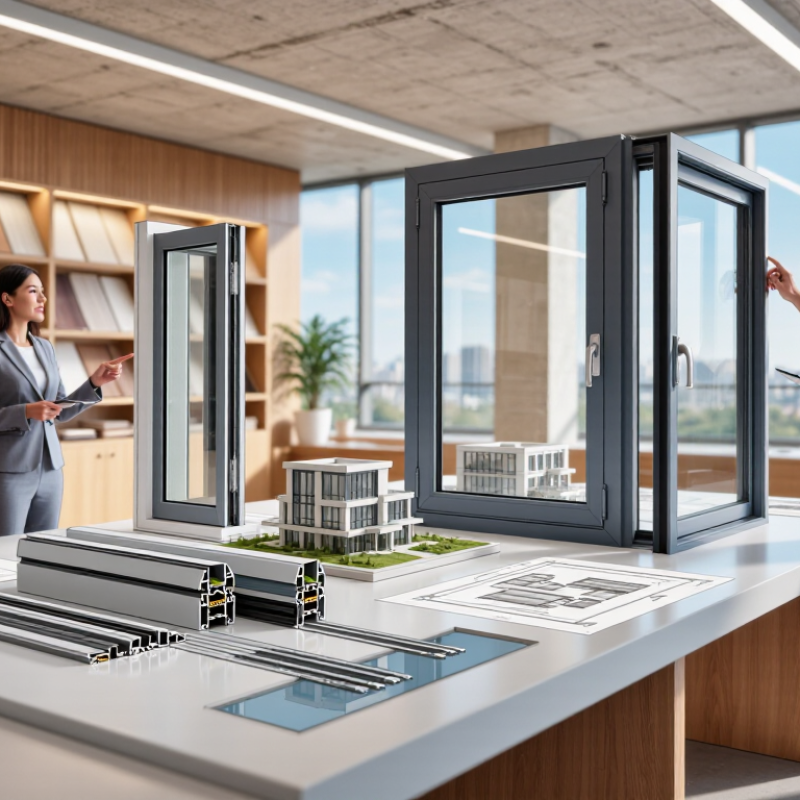
Guillotine vertical sliding windows use one or two sashes that move up and down within a frame. They are often called single-hung or double-hung windows. A single-hung model has one moving sash. A double-hung model allows both sashes to slide vertically. This movement supports controlled ventilation, especially when the upper sash opens slightly and warm air escapes.
Modern systems usually include balances, weather seals, drainage paths, and insulated glass. Their performance depends on more than appearance. The U.S. Department of Energy reports that windows can account for about 25–30% of residential heating and cooling energy use. Therefore, suppliers should provide tested U-factor, solar heat gain coefficient, visible transmittance, and air-leakage data. NFRC certification can make comparisons more reliable. Still, a laboratory rating cannot fully predict poor installation.
Tips: Ask suppliers for performance labels and test reports. Check sash weight, locking pressure, and replacement-part availability. For tall openings, inspect the balance system carefully. A smooth sample may hide difficult maintenance. Review water-penetration results for windy or rainy locations. Also confirm whether the frame suits masonry, timber, or lightweight construction. In my experience, choosing a slightly simpler window often reduces service problems. That judgment is not universal. Regional climate and installer skill can change the result. Suppliers for 2026 projects should explain these limits clearly, not only promote thermal figures.
In 2026, choosing guillotine vertical sliding window suppliers requires more than comparing prices. Evaluate measurable performance, documented testing, and installation support. A reliable supplier should provide air leakage, water penetration, structural load, and thermal performance results. Ask whether testing followed recognized regional or international standards. Request complete reports, not selected screenshots.
Examine the window’s movement in daily use. The sash should lift smoothly and remain stable at different heights. Counterbalance systems need accurate adjustment and repeated-cycle testing. Check frame strength, drainage channels, gasket quality, and corrosion resistance. For busy buildings, ask about hardware cycle ratings and replacement access. Glazing options should address heat gain, noise, safety, and condensation risks. A lower U-value can improve comfort, but the whole assembly still matters.
Tips: Compare identical sizes and glass specifications. Request a physical sample. Test the locking points yourself. Confirm lead times, warranty limits, spare parts, and installer training. Keep written records of every performance claim.
Field inspections often reveal small issues that brochures miss. A stiff handle, uneven seal, or shallow drainage path can create expensive maintenance later. I would also question impressive thermal figures without installation details. Laboratory results may not represent a poorly fitted window. No supplier is perfect. Stronger evidence usually comes from independent testing, clear technical drawings, site references, and responsive after-sales support. The best comparison combines numbers with hands-on checks and honest discussion of limitations.
Reference performance benchmarks for comparing vertical sliding window suppliers. Lower values are better for U-factor and air leakage; higher values indicate stronger water and structural resistance.
Benchmarks reflect commonly specified North American window-performance criteria, including NFRC thermal-rating practices and AAMA/NAFS-style air, water, and structural testing. Actual requirements vary by climate zone, project location, glazing package, and tested product configuration.
Selecting a reliable guillotine vertical sliding window supplier requires more than comparing prices. Review test reports, production controls, and installation guidance together. The U.S. Department of Energy reports that windows can cause 25–30% of residential heating and cooling energy use. Poor seals can become expensive quickly.
Ask suppliers for whole-window U-factor, solar heat gain coefficient, air-leakage, water-penetration, and structural-performance results. Prefer documents tested under AAMA/WDMA/CSA 101/I.S.2/A440 procedures, with traceable laboratory details. NFRC data is also useful because it supports consistent energy-performance comparisons.
Check whether the supplier tests complete assemblies, not only glass. A strong frame can still fail around the meeting rail.
Tips: Request three recent project references. Inspect corner welds, balances, locks, drainage paths, and weatherstripping samples. Test several operating cycles before approval. Ask how replacement parts are stored and how warranty claims are measured. Short answers deserve caution.
Factory audits should examine batch records, coating thickness, glass tolerances, and final inspection rates. A supplier may show an impressive showroom sample, yet production consistency matters more. I would also compare delivery records, corrective-action reports, and response times after defects. Perfect documentation does not guarantee perfect windows. It reveals how honestly problems are handled. One practical weakness is that small suppliers may lack formal data, although experienced technicians can still produce dependable work. Verify their claims through independent testing and physical samples.
Guillotine vertical sliding windows are gaining attention in restaurants, public buildings, and modern homes. Their balanced sashes create wide openings without demanding large exterior space. In 2026, buyers should compare suppliers through performance evidence, not attractive catalog images.
An experienced supplier should provide tested air, water, wind, thermal, and acoustic results. Ask for complete reports, material specifications, and clearly stated test conditions. Robust suppliers explain frame alloys, glass options, drainage paths, counterbalance systems, and locking hardware. Installation guidance matters too. A precise frame can still perform poorly after careless fitting.
Look for suppliers offering custom dimensions, replacement parts, and responsive technical support. Visit completed projects when possible. Observe how smoothly each sash moves, especially after repeated operation. Request references from similar climates and building types. A long warranty sounds useful, but its exclusions deserve careful reading.
No supplier is perfect. Some impressive systems may have limited local service or expensive custom components. I would question vague energy claims and unverified durability promises. The strongest choices usually combine transparent documentation, practical installation training, stable production quality, and realistic after-sales support. Small details matter.
2026 Top Guillotine Vertical Sliding Windows Suppliers?
Choosing the Right Supplier for Your Project Needs
Selecting a guillotine vertical sliding window supplier starts with your project’s actual conditions. Measure opening sizes, wind exposure, drainage needs, and interior clearance before requesting quotations. A supplier should explain glass options, frame strength, thermal performance, and operating limits in clear language. Details reveal competence.
Ask for tested air, water, and structural performance data, not vague promises. Confirm whether the stated values apply to the complete window assembly. Review profiles, seals, rollers, locks, and safety restrictors through a physical sample. Small hardware failures can disrupt an otherwise attractive installation. Ask for proof.
Reliable suppliers provide drawings, installation guidance, production schedules, and responsive technical support. Compare warranty coverage carefully, including finishes, moving parts, glass, and replacement procedures. Check whether the supplier can produce your required sizes consistently and package units safely for transport. A low quote may hide weaker components or incomplete service.
Factory communication also matters. Request written confirmation of tolerances, color samples, glazing specifications, and inspection steps before approving production. For renovation work, ask how the supplier handles uneven openings and unexpected site conditions. A perfect specification rarely survives every building. Leave room for adjustment, and record every change. Supplier choice should reflect service reliability, documented performance, and practical fit, not only the lowest initial price.
| Evaluation Dimension | What to Request from the Supplier | Relevant Technical or Commercial Benchmark | Why It Matters to the Project | Priority |
|---|---|---|---|---|
| Window Configuration | Confirm whether the quotation covers a true vertical sliding or guillotine-style window, including fixed, sliding, counterweighted, or motorized sections. | The operating arrangement, clear opening, panel count, and sash movement should be shown on approved drawings before production. | Different configurations affect ventilation, safety, structural loading, maintenance, and installation requirements. | High |
| Frame Material | Request the exact frame material, alloy or grade where applicable, finish specification, and evidence of corrosion resistance. | Common commercial options include thermally broken aluminium, uPVC, steel, and stainless steel, selected according to exposure and design loads. | Material selection influences service life, appearance, weight, thermal performance, and total ownership cost. | High |
| Glass Specification | Obtain the glass build-up, thickness, safety classification, spacer type, coating, and calculated thermal values. | Safety glazing is generally required where impact risk exists; insulated glazing can improve thermal performance compared with single glazing. | Glass selection affects occupant safety, energy use, acoustic comfort, solar gain, and regulatory compliance. | High |
| Air, Water, and Wind Performance | Ask for independently verified test results or project-specific calculations for air permeability, watertightness, and wind resistance. | Performance should be assessed against the applicable local standard and the building’s exposure category, height, and wind zone. | Laboratory or project evidence is more reliable than unsupported performance claims and helps reduce weather-related defects. | High |
| Thermal Performance | Request the calculated whole-window U-value, glass U-value, solar-factor data, and thermal-bridge details where relevant. | Whole-window performance is determined by the frame, glass, spacer, size, and edge conditions rather than glass data alone. | Accurate thermal information supports energy modelling, condensation control, and compliance with project energy targets. | High |
| Operating Mechanism | Clarify the counterweight, spring, chain, pulley, or motorized mechanism, including rated load, cycle testing, and replacement parts. | The mechanism should be sized for the complete moving sash and supplied with safe stops, guides, and access for adjustment. | Correct sizing improves ease of operation, reliability, user safety, and long-term maintenance outcomes. | High |
| Safety and Fall Protection | Request details for restrictors, interlocks, anti-drop devices, laminated safety glass, guards, and emergency release provisions. | Safety measures must follow the building code and occupational requirements applicable to the installation location. | Large vertically moving panels can create crush, fall, impact, and uncontrolled-movement hazards if not properly designed. | High |
| Size and Structural Limits | Confirm maximum sash dimensions, panel weight, mullion or transom limits, tolerances, and structural support requirements. | Allowable sizes depend on frame geometry, glass weight, wind pressure, hardware capacity, and deflection limits. | Checking limits early prevents redesign, excessive operating forces, glass breakage, and installation delays. | High |
| Finish and Colour | Specify the coating system, colour reference, gloss level, surface preparation, and expected colour consistency between batches. | Exterior finishes should be selected for the project’s humidity, salt exposure, pollution level, and ultraviolet exposure. | A suitable finish protects the frame and helps maintain appearance throughout the intended service period. | Medium |
| Testing and Documentation | Request product drawings, installation instructions, operation manuals, maintenance schedules, declarations, and test certificates. | Documentation should identify the tested configuration and should not be assumed to apply to a different size, glass type, or hardware setup. | Complete records support approvals, quality control, commissioning, handover, and future maintenance. | High |
| Customization Capability | Check the supplier’s ability to produce non-standard sizes, special glazing, integrated blinds, screens, acoustic options, or automation. | Custom requirements should be confirmed through shop drawings, prototypes, or engineering calculations before the purchase order. | Early confirmation reduces the risk that a standard product will be used where the project requires a special solution. | Medium |
| Lead Time and Capacity | Obtain the manufacturing, approval, packing, shipping, and installation schedule, including realistic production capacity. | A dependable programme should include time for drawing approval, sample review, procurement of glass and hardware, and site access. | Transparent scheduling helps coordinate structure, finishes, glazing, delivery, and commissioning activities. | High |
| Packaging and Delivery | Confirm export packaging, moisture protection, identification labels, unloading requirements, and damage-claim procedures. | Large glazed units should be protected against movement, edge damage, moisture, and impact during handling and transport. | Good logistics controls reduce breakage, site congestion, replacement costs, and programme disruption. | Medium |
| Installation Support | Ask whether the supplier provides method statements, site training, technical supervision, and responses to installation queries. | Installation should follow approved details for substrate preparation, fixing, shimming, sealing, drainage, and alignment. | Even a well-designed window can underperform when it is incorrectly supported, sealed, aligned, or commissioned. | High |
| Warranty and After-Sales Service | Review warranty coverage for frames, glass, finishes, hardware, motors, seals, and installation, including exclusions and response times. | Warranty terms should be written, project-specific, and supported by an accessible process for spare parts and service requests. | Clear after-sales obligations reduce operational risk and improve the predictability of long-term maintenance costs. | High |
| Total Cost of Ownership | Compare the complete cost of the window, glazing, hardware, controls, delivery, installation, testing, maintenance, and replacement parts. | The lowest initial quotation is not necessarily the lowest lifecycle cost, particularly for motorized or heavily used installations. | A lifecycle comparison supports a better purchasing decision than comparing the product price alone. | High |
Note: Final requirements should be verified against the project location, applicable building regulations, structural calculations, fire and life-safety requirements, and the supplier’s project-specific technical documentation.
They use one or two sashes that move vertically inside a frame. A single-hung window has one moving sash. A double-hung window has two. The name sounds more dramatic than the operation.
Opening the upper sash lets warm indoor air escape. Opening the lower sash admits cooler air. Both sashes can support controlled airflow. Small openings may be enough.
Look for balances, weather seals, drainage paths, and insulated glass. These parts affect comfort, durability, and maintenance. Appearance alone proves little.
Request tested U-factor, solar heat gain, visible transmittance, and air-leakage data. Ask whether testing covered the complete window assembly. A rating cannot fix poor installation.
Compare tested air, water, and structural performance data. Review profiles, seals, rollers, locks, and safety restrictors. Inspect a physical sample. Small hardware failures matter.
Inspect the balance system carefully. The sash must move smoothly and remain supported. Ask about sash weight and replacement parts. A smooth sample may hide difficult servicing.
Measure opening sizes, wind exposure, drainage needs, and interior clearance. Confirm whether frames suit masonry, timber, or lightweight construction. Renovation openings may be uneven. Leave room for adjustment.
Check coverage for finishes, moving parts, glass, and replacement procedures. Request drawings, installation guidance, production schedules, and packing details. Confirm tolerances, colors, glazing, and inspection steps in writing. Low prices sometimes hide incomplete service.
Not necessarily. A cheaper window may use weaker components or offer limited support. A simpler design can reduce service problems. That judgment is not universal. Climate and installer skill can change the result.
Guillotine Vertical Sliding Windows are designed with vertically moving sashes that provide practical ventilation, efficient space use, and a distinctive architectural appearance. When comparing these systems, consider frame strength, sash balance, glass performance, weather resistance, insulation, security features, ease of operation, and compliance with relevant building standards. Durability, smooth movement, low maintenance requirements, and dependable sealing are also essential indicators of long-term performance.
To evaluate suppliers in 2026, review their manufacturing capabilities, quality-control procedures, material options, customization services, technical support, lead times, warranty terms, and installation guidance. A reliable supplier should offer clear specifications, consistent product quality, responsive communication, and evidence of successful project experience. The right choice will depend on your project’s design goals, climate, building regulations, budget, opening sizes, thermal requirements, and preferred maintenance level. Comparing suppliers systematically can help ensure that the selected windows deliver lasting value, dependable operation, and a suitable balance of appearance and performance.