+91 93776 04923 [email protected] Surat, Gujarat, India · Exporting worldwide
0%

Choosing the best Motorised Aluminium Doors for 2026 requires more than comparing appearance, price, and opening speed. Global buyers need evidence about durability, thermal performance, automation, safety, and service support. The IEA’s Buildings 2023 report states that buildings consume about 30% of global final energy and produce approximately 26% of energy-related emissions. Doors cannot solve this challenge alone. However, well-designed frames, insulated panels, tight seals, and intelligent controls can reduce avoidable heat exchange.

The aluminium story also deserves attention. According to the International Aluminium Institute, recycling aluminium uses roughly 95% less energy than producing primary aluminium. That figure makes recycled content relevant, but product quality still matters. Poor machining, weak hinges, or unreliable motors can erase the value of an attractive sustainability claim. The International Energy Agency also highlights stronger building efficiency standards and digital controls as important market directions. That supports demand for connected doors, but compatibility varies between regions and suppliers.

This guide will compare Motorised Aluminium Doors for homes, offices, hotels, warehouses, and transport facilities. It will examine motor types, cycle ratings, noise levels, weather resistance, access control, emergency release systems, and maintenance requirements. A door facing coastal wind needs different protection from one installed inside a dry showroom. Certification is not decoration.

The “best” option depends on the building.

Price alone is a weak test. Buyers should request verified performance data, installation details, warranty terms, spare-parts availability, and local technical support. Some specifications look impressive on paper. Real performance may be less certain. That deserves honest review.
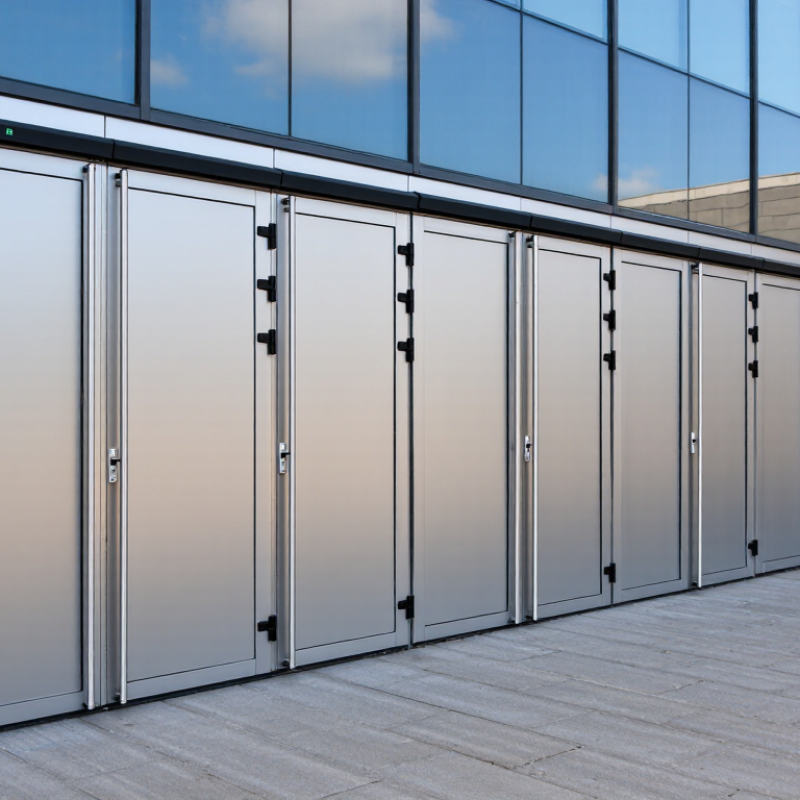
2026 Best Motorised Aluminium Doors for Global Buyers?

What Are Motorised Aluminium Doors and How Do They Work?

Motorised aluminium doors use a powered motor to open and close lightweight aluminium panels. Most systems include a gear motor, control board, sensors, and a low-voltage power supply. Sliding models move along a concealed track. Swing models rotate from powered hinges. The controller receives signals from radar, infrared sensors, push buttons, or access-control devices. It then adjusts speed, opening distance, and closing force. Safety sensors stop movement when a person or object enters the doorway. Many systems also include battery backup and manual release functions.

The aluminium frame resists corrosion and supports slim, durable profiles. Thermal breaks and insulated panels can reduce heat transfer. This matters because the International Energy Agency reports that buildings consume roughly 30% of global energy. Yet automation alone does not guarantee savings. Poor sealing, frequent opening, or badly adjusted sensors can increase air loss. That assumption needs challenging. Fortune Business Insights valued the global automatic doors market at about USD 7.63 billion in 2023 and projected continued growth through 2032. Buyers should examine cycle testing, sensor response, motor noise, and service access. EN 16005 and ANSI A156.10 provide useful safety references, but local requirements still differ. In real installations, the quietest door is not always the most reliable. A precise site survey often matters more than a larger motor.

Which Motorised Aluminium Door Types Suit Different Global Applications?

Motorised aluminium doors are not one universal solution. The opening size, climate, traffic, and security needs should guide selection. Sliding doors suit airports, hotels, offices, and retail entrances with limited floor space. Their panels travel sideways, leaving the entrance clear. Choose heavy-duty rollers for frequent daily cycles.

Bi-folding doors work well in restaurants, villas, and event spaces. They create a wide opening without requiring a long sliding track. However, their hinges and motors need careful alignment. A small installation error can cause noise, uneven movement, or premature wear. That detail is often underestimated.

Rolling aluminium doors can serve warehouses, garages, and service areas where compact storage matters. Insulated slats are useful in colder regions or buildings with strong temperature differences. Hinged motorised doors may fit clinics, residential entrances, and narrow corridors. They usually offer simpler access control, but their swing path needs clear space.

Coastal projects require corrosion-resistant finishes, sealed electronics, and regular cleaning because salt can damage exposed components. Hot climates demand attention to surface temperature, ventilation, and motor protection. Cold regions may need drainage planning and sensors that perform reliably in frost. Local voltage, emergency release rules, accessibility requirements, and maintenance support must be checked before ordering. A specification can look excellent on paper, yet fail when local technicians cannot source a replacement part. Simpler systems are sometimes the safer choice.

How to Compare Materials, Motors, Safety Features, and Smart Controls

2026 Best Motorised Aluminium Doors for Global Buyers?

Material, motor, safety, and smart controls deserve equal attention.

Aluminium is light, corrosion-resistant, and easier to automate than heavier steel assemblies. However, its high thermal conductivity can create cold bridges without a proper thermal break. That detail affects condensation, comfort, and long-term energy use. The IEA and UNEP 2023 Global Status Report states that buildings consume about 30% of global energy and create 26% of energy-related emissions. Choose insulated panels, sealed joints, and tested thermal breaks for demanding climates. A cheaper frame may become expensive through heat loss and maintenance.

Compare motors by door mass, wind exposure, cycle frequency, noise, and emergency operation—not wattage alone.

Ask for overload protection, obstruction detection, photocells, and a manual release. EN 12453 emphasizes safe force limitation and protective measures for powered doors. Smart controls should provide encrypted communication, user permissions, event logs, and local operation during internet failure. A cloud-only door is convenient, but not resilient. Check the motor’s IP rating for rain, dust, and coastal air. Also verify voltage compatibility and spare-part support in the destination country. Specifications can look perfect on paper. Installation still decides much of the result.

Tips:

Request independent test documents, not marketing claims. Measure the opening and wind conditions accurately. Test reversal sensors with a qualified installer. Keep a physical control method available. I would not ignore manual operation; network outages happen.

What Installation, Maintenance, and Climate Factors Should Buyers Consider?

Motorised aluminium doors can suit homes, offices, and retail entrances in many climates. Yet the motor and frame must match local conditions. Before ordering, measure the opening at several points. Walls are rarely perfectly square. A rushed measurement can create uneven gaps, noise, and premature wear.

Installation quality matters more than attractive specifications. Use a trained local installer who understands wind loads, drainage, electrical safety, and emergency access. In coastal areas, salt can attack hinges, fasteners, and control components. In dusty regions, grit may enter tracks and strain the motor. Cold climates require suitable seals and lubricants, while hot climates demand attention to thermal expansion. Glass size, door weight, and opening frequency also affect motor performance.

Tips: Confirm spare-part availability before purchase. Ask for a written maintenance schedule. Keep drainage paths clear. Test manual release systems regularly. Wipe tracks with a dry cloth, not excessive water. Inspect seals after storms. In humid locations, check corrosion every few months. Remote controls should be protected from moisture and extreme heat. A small alignment problem can become an expensive repair. Even experienced installers may overlook sunlight movement across large frames, so review the door at different times of day.

How to Evaluate Suppliers, Certifications, Costs, and Long-Term Value?

Choosing motorised aluminium doors for global projects requires more than comparing catalogue prices. Ask suppliers for alloy grade, wall thickness, motor specifications, cycle testing, and installation tolerances. A reliable supplier should provide clear drawings, wiring diagrams, maintenance instructions, and recent project references. Factory video calls help, but an independent inspection is stronger evidence.

Certifications need careful checking. Request valid test reports, declarations, and certificates matching the exact door model. Depending on the destination, verify applicable requirements for electrical safety, machinery safety, fire performance, and automatic pedestrian doors. CE marking may be relevant in some markets, but it is not a universal quality guarantee. Check the certificate issuer, test date, product scope, and control system details. Small discrepancies matter.

Price is only the beginning. Compare the complete delivered cost, including motors, sensors, control panels, packaging, shipping, duties, installation, commissioning, and spare parts. Ask how quickly replacement boards and seals can arrive. A cheap door can become expensive after repeated sensor failures or difficult servicing. Look for corrosion-resistant finishes, accessible components, manual release functions, and documented cycle-life testing. Long-term value also depends on local technicians and response times. My own evaluation would still include a weakness: spreadsheets rarely capture lost access during repairs. No supplier is perfect, so record unanswered questions and test one sample before approving a large order.

FAQS

Which motorised aluminium door suits an entrance with limited floor space?

Sliding doors suit airports, hotels, offices, and shops. Their panels move sideways, keeping the entrance clear. Use heavy-duty rollers for frequent cycles.

When are bi-folding aluminium doors a practical choice?

Bi-folding doors suit restaurants, villas, and event spaces. They create wide openings without long sliding tracks. Hinges and motors need precise alignment.

Where can rolling aluminium doors work effectively?

Rolling doors suit warehouses, garages, and service areas. Their slats store compactly above the opening. Insulated slats help in colder regions.

What should narrow entrances consider before choosing hinged doors?

Hinged motorised doors suit clinics, homes, and narrow corridors. Their swing path needs clear space. Access control is usually simpler.

How should climate affect the door specification?

Coastal sites need corrosion-resistant finishes, sealed electronics, and regular cleaning. Salt reaches exposed components quickly. Hot climates require ventilation and motor protection.

What motor features matter beyond power rating?

Compare door weight, wind exposure, noise, cycles, and emergency operation. Request overload protection, obstruction detection, photocells, and manual release. Wattage alone misleads.

Which safety and smart-control features deserve attention?

Choose force limitation, reversal sensors, protected wiring, and physical controls. Smart systems should support permissions and event logs. Internet failure still happens.

How can buyers assess suppliers and long-term costs?

Request drawings, wiring diagrams, test reports, maintenance instructions, and project references. Confirm replacement-part availability locally. A cheap door may cost more later.

What should be checked before approving a large order?

Measure the opening and wind conditions accurately. Check voltage, installation tolerances, certificates, and cycle testing. Test one sample first. Spreadsheets miss repair delays.

Conclusion

Motorised Aluminium Doors combine lightweight, corrosion-resistant aluminium frames with electric motors that automate opening and closing. They can be configured as sliding, swing, folding, or rolling systems to suit homes, offices, retail spaces, transport facilities, and industrial environments. Global buyers should compare door dimensions, glazing options, thermal performance, motor capacity, operating speed, noise levels, backup power, and compatibility with access control or smart-home systems. Safety features such as obstacle detection, emergency release, soft closing, and manual override are essential for reliable daily use.

Before purchasing, buyers should assess local climate conditions, including humidity, salt exposure, wind, heat, cold, and heavy rainfall. Professional installation, drainage, sealing, alignment, and regular inspection can significantly extend service life. Supplier evaluation should include product testing, applicable certifications, warranty coverage, spare-parts availability, technical support, installation training, and transparent total-cost estimates. The best choice is not always the lowest initial price, but the solution that delivers dependable performance, efficient maintenance, strong safety, and long-term value across its intended environment.


Ethan

Ethan

Ethan is a dedicated marketing professional with a strong understanding of the company’s products, services, and customers. With a combination of strategic insight, industry knowledge, and clear communication skills, he helps present complex product information in a practical and engaging way. As a......